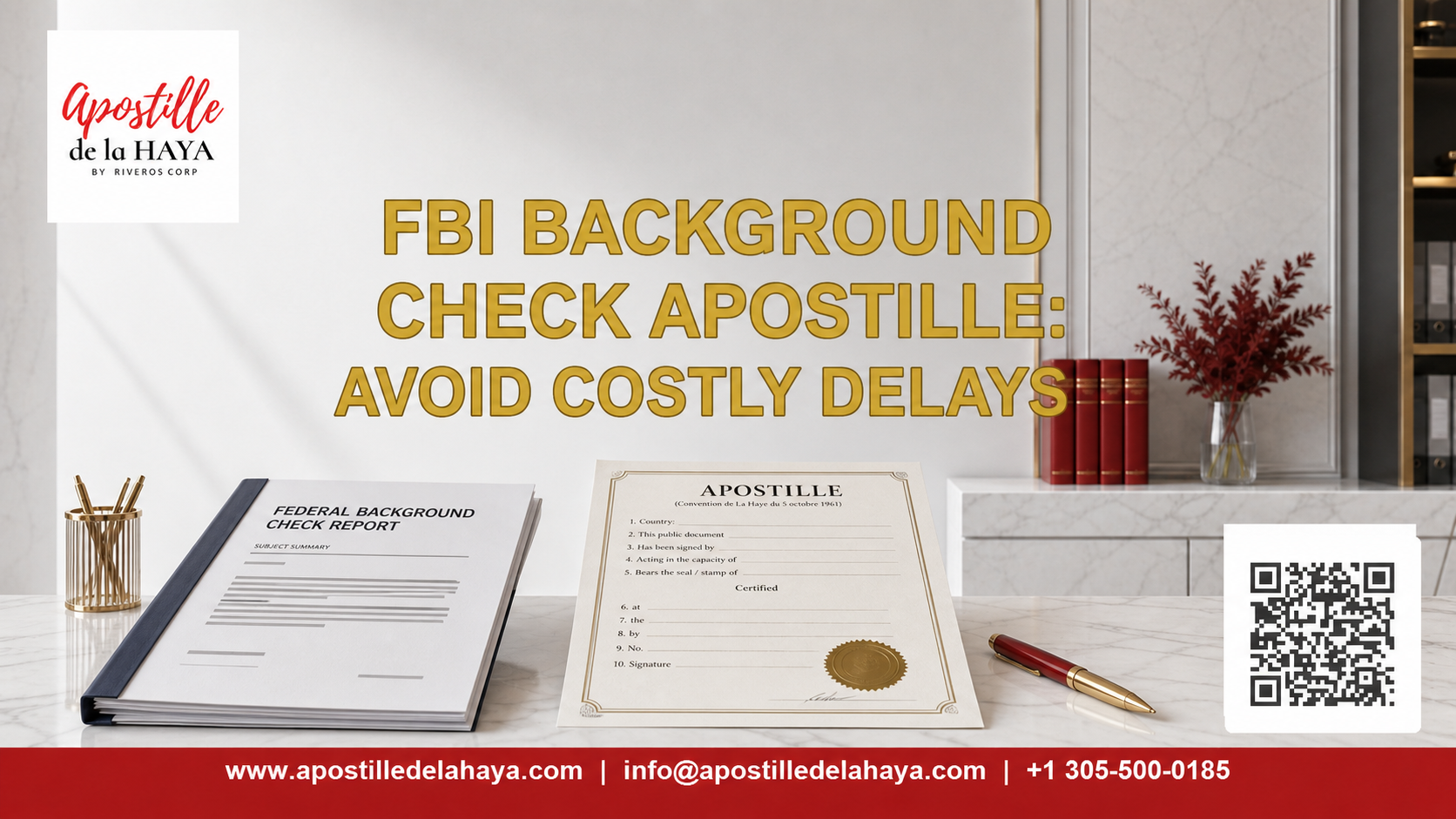
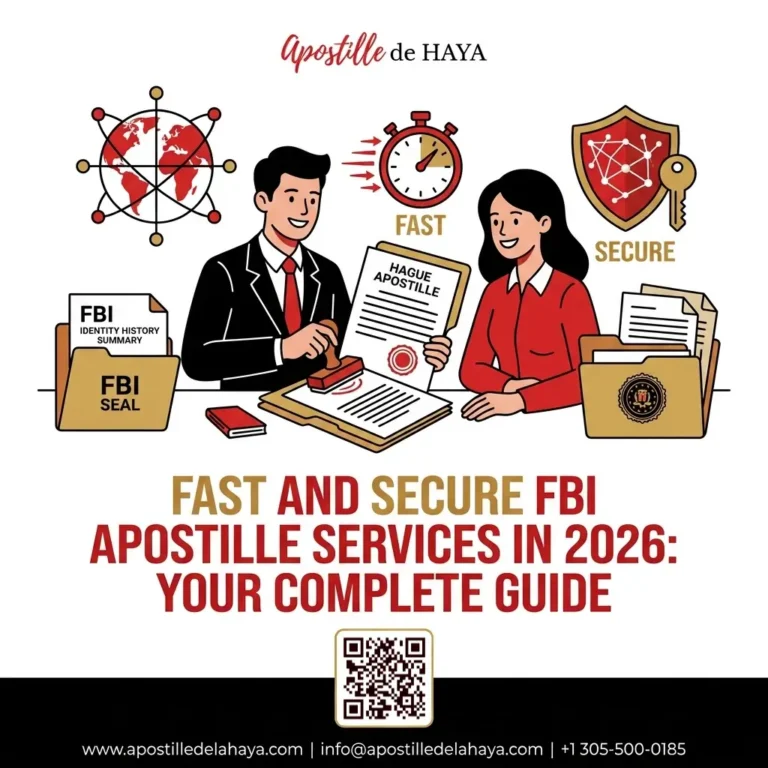
If you are planning to work, study, adopt, or obtain residency in a foreign country, you will likely be asked to provide an authenticated criminal background check. For U.S. citizens and residents, this means obtaining an Identity History Summary from the FBI and, crucially, getting it apostilled. FBI apostille services are specialized federal authentication procedures handled exclusively by the U.S. Department of State in Washington, D.C., to make your background check legally valid overseas under the Hague Convention.
A standard public notary or a state Secretary of State cannot apostille an FBI background check. Attempting to route this federal document through state channels will result in immediate rejection.
At Apostille de la Haya, we are specialists in federal document authentication. We navigate the complex U.S. Department of State protocols on your behalf, ensuring your FBI background check is apostilled correctly, securely, and as quickly as government processing times allow, so you can meet your international deadlines without the stress of bureaucratic red tape.
What is an FBI Background Check Apostille?
An apostille is a specialized certificate issued by a government authority that authenticates the origin of a public document. When a foreign government requests your FBI background check (often referred to as an Identity History Summary Check or a «police clearance»), they need proof that the document was genuinely issued by the Federal Bureau of Investigation.
Because the FBI is a federal agency, the authentication process is different from state-issued documents (like birth or marriage certificates). The apostille attached to an FBI background check confirms the authenticity of the signature of the FBI Section Chief or the digital seal provided on the official PDF results.
What Do FBI Apostille Services Include?
FBI apostille services involve authenticating your FBI Identity History Summary. The U.S. Department of State adds a certificate confirming the document’s origin.
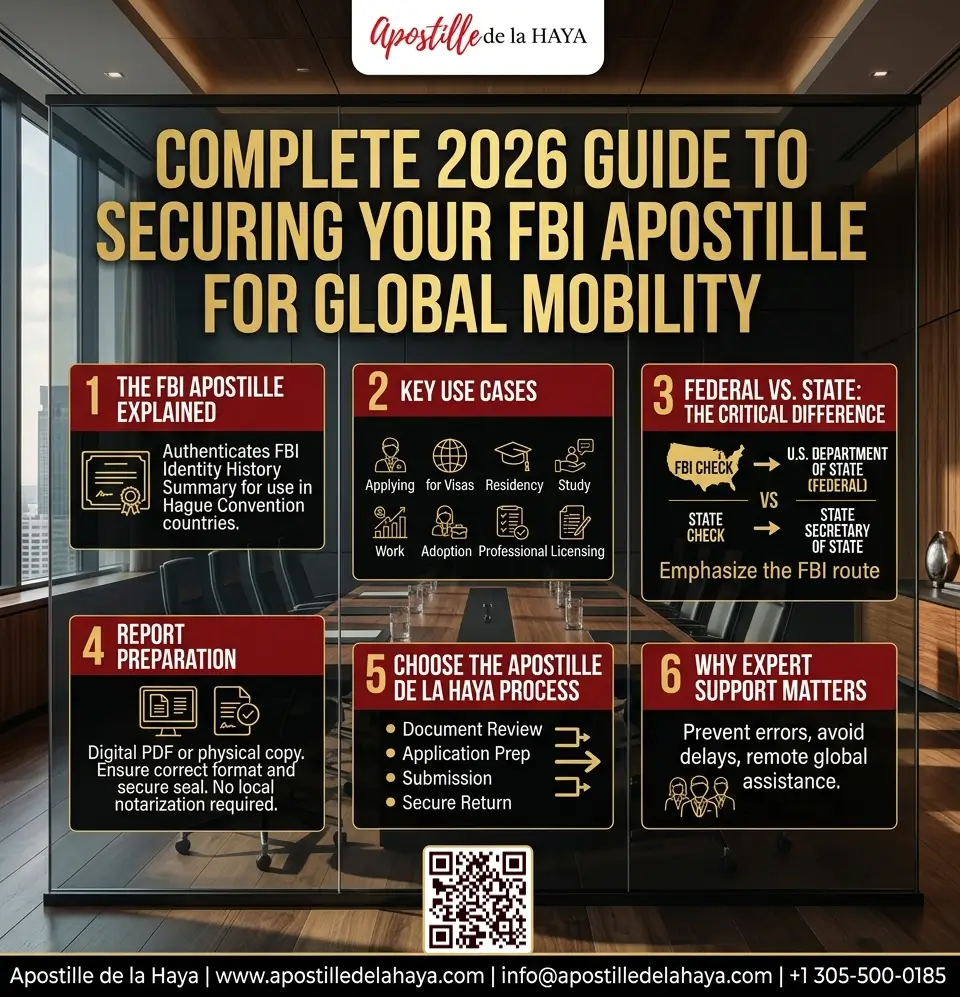
Why Apostilles Matter
Countries in the Hague Convention require an apostille, not a notarized copy. Therefore, the apostille gives your document full legal standing overseas.
When Are FBI Apostille Services Needed?
You will need these services if you’re:
Applying for a visa or residency abroad
Starting a job or academic program overseas
Finalizing citizenship, marriage, or adoption applications
Complying with international employment or licensing regulations
State vs. Federal Apostilles: The Most Common Rejection Reason
The number one reason individuals face delays in their international plans is confusing state apostilles with federal apostilles.
State Apostilles: Processed by the local Secretary of State for documents generated within that specific state (e.g., a Texas birth certificate goes to the Texas Secretary of State).
Federal Apostilles: Processed only by the U.S. Department of State – Office of Authentications in Washington, D.C.
If you take your FBI background check to a local notary or mail it to your state’s capital, it will be rejected and returned to you unauthenticated. You must use specialized fbi apostille services that deal directly with the federal government.
When They Ask for the State Check, Not the FBI One
That rejection runs in both directions. Some foreign authorities do not want a federal report at all: the checklist asks for a police certificate from the state where you lived, studied or worked. An FBI report sent in that situation comes back just as fast.
Read the request literally. Wording such as “police certificate from your state of residence” points to a state record, not a federal one. It shows up in work and residence visas, and in teacher, childcare and healthcare licensing abroad, where the regulator is scoped to the state that issued your credential.
A state check is issued by a state police agency, a state Department of Justice or a Department of Public Safety — in Florida, the FDLE criminal history record. And it takes a different route:
- A state document goes to that state’s Secretary of State.
- An FBI report goes to the U.S. Department of State in Washington, D.C.
Two things catch people out on the state route. Some states require a county clerk to authenticate the notary’s commission first, before the Secretary of State will issue the apostille. And the instant “national database” reports sold by employment-screening companies are not apostillable at all — they are not government records, so no authority will certify them.
How to Prepare Your FBI Report for an Apostille
Before your document can be submitted to the U.S. Department of State, it must be in the correct format. The FBI currently issues background checks in two ways, and both are eligible for an apostille if handled correctly:
1. The Digital PDF Version
When you request your background check from the FBI online (via the CJIS division) or through an approved channeler, you receive a digital PDF file. This file contains a secure digital seal and the signature of the current Section Chief. The U.S. Department of State accepts printouts of this official PDF for apostille processing. You do not need to notarize this printout.
2. The Hard Copy Mailed Version
If you requested a physical copy mailed directly from the FBI on tamper-proof paper, this original document is also ready for federal authentication. Like the PDF version, it does not require additional local notarization before being sent to Washington, D.C.
The FBI Apostille Process
Step 1: Get Your FBI Background Check
You must obtain your official FBI report. Apostille de La Haya helps ensure your document is in the correct format and ready for authentication.
Step 2: Document Review and Preparation
We check every detail:
Official FBI report (digital or printed)
Completed Form DS-4194
Proper mailing and return materials
Step 3: Submit for Apostille Certification
We submit your application to the U.S. Department of State through one of the following methods:
Mail-in service (standard route)
Walk-in service in Washington, D.C.
⏰ Hours: Monday to Thursday, 7:30 a.m. – 9:00 a.m. (drop-off only; early arrival strongly recommended)
⚠️ Service not available on Fridays
⚠️ Same-day pickup not guaranteedExpedited courier (when available)
⚠️ Availability may vary depending on federal office workload
📝 Note: Apostille processing times may change depending on demand, holidays, and federal workload. Always confirm current turnaround times with our team.
Step 4: Receive Your Apostilled Document
We return your apostilled FBI report via secure courier. It arrives fully certified and ready to present abroad.
What Can Go Wrong Without Expert Support?
FBI apostille services must follow strict federal rules. Errors can delay your plans.
Common Mistakes Include:
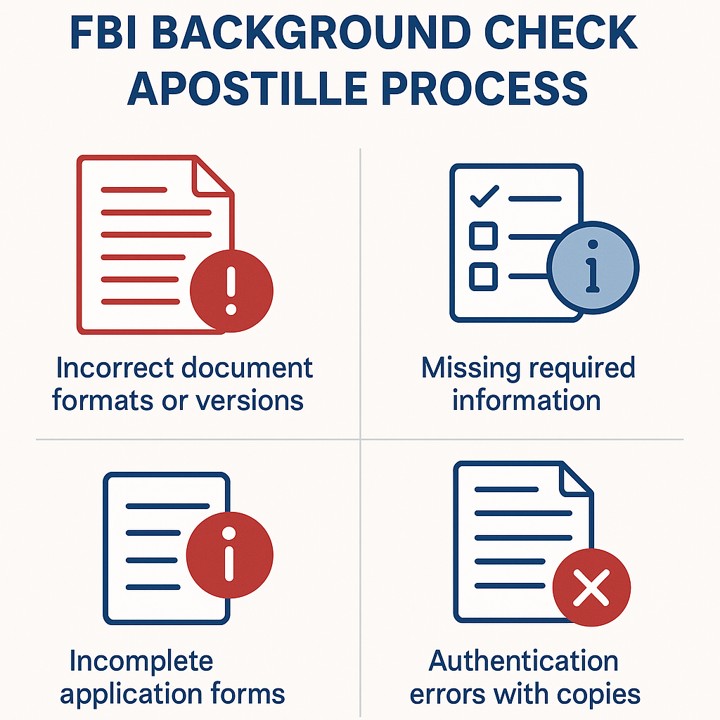
Apostille de La Haya prevents these mistakes through expert review and client support.
Why Choose Apostille de La Haya?
We offer complete FBI apostille services, from report validation to final delivery. See exactly how the process works.
Our Advantages:
Full support through each step
Document preparation based on 2025 standards
Remote assistance for clients worldwide
Fast, clear communication with no surprises
Furthermore, our experienced team prevents common pitfalls that could delay your case.
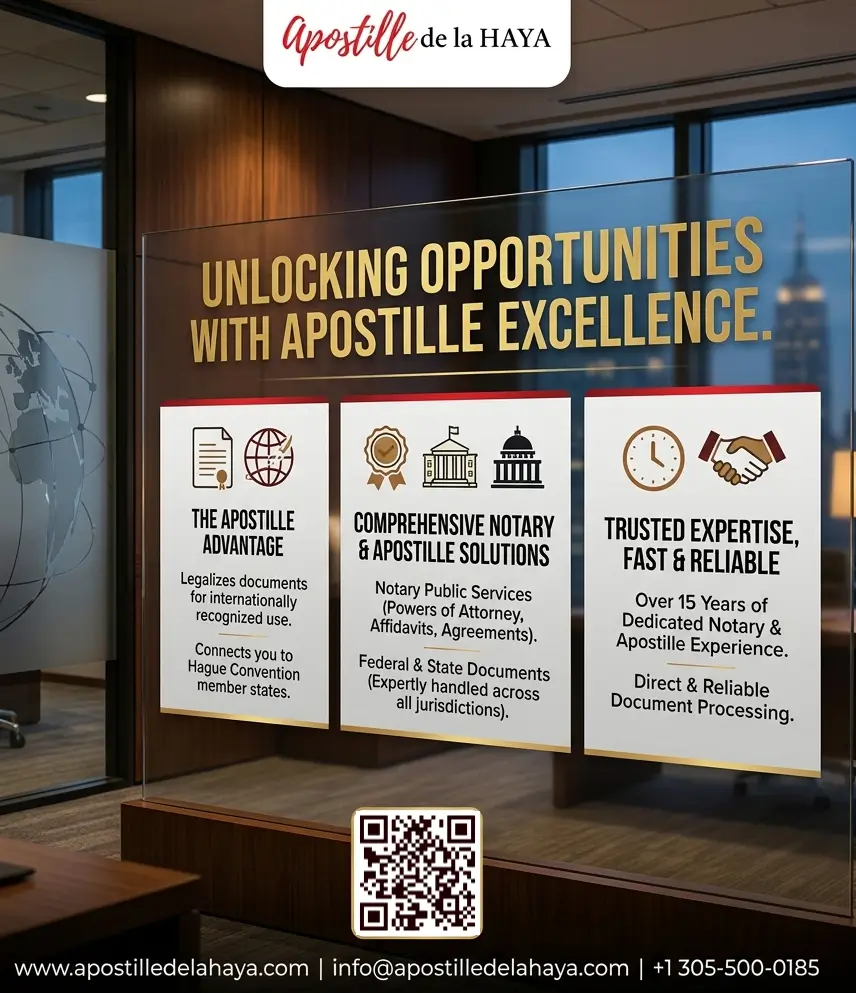
How Apostille de la Haya Expedites Your International Goals
Navigating federal bureaucracy requires precision and specialized knowledge. When you trust your documents to Apostille de la Haya, you eliminate the guesswork and protect your international timeline.
As your dedicated processing specialists, our fbi apostille services include:
Document Verification: We review your FBI digital PDF or hard copy to ensure it meets the exact criteria demanded by the U.S. Department of State.
Preparation of Federal Forms: Our team accurately prepares the DS-4194 and handles all required government agency fees.
Secure Logistics: We manage the secure routing of your sensitive documents to and from Washington, D.C., ensuring they are tracked and handled with the utmost confidentiality.
Global Delivery: Once the federal apostille is successfully attached, we can ship your authenticated document anywhere in the world using international expedited shipping.
Do not let federal delays or application errors derail your visa, new job, or residency abroad. Contact Apostille de la Haya today to submit your background check, and let our specialists secure your federal apostille with speed and precision.
👉 Contact us now to begin your apostille process—done right, without complications.
Testimonials from Real Clients
FBI Apostille Requirements Change by Destination Country
An apostille authenticates your FBI background check for use in another country, but each destination can add its own conditions. Some countries accept the apostille on the digital, digitally-signed PDF version of the FBI report; others insist on a mailed hard copy. Many require a certified translation into their official language, and a few expect the translation itself to be apostilled or notarized in a specific way.
Timing rules also differ: certain consulates and immigration authorities will only accept an FBI check that was issued within the last three to six months. Confirming the destination country’s exact expectations before you submit prevents the frustrating scenario of a correctly apostilled document being rejected on a technicality. Apostille de La Haya reviews destination requirements as part of the process, so your packet matches what the receiving authority actually wants.
How Long Is an FBI Apostille Valid?
The apostille certificate itself does not expire—it permanently authenticates the signature on the document it is attached to. What can expire, in practice, is the underlying FBI background check. Because a background check reflects records as of the date it was issued, many foreign authorities treat it as valid only for a limited window, commonly three to six months.
This means the smartest sequence is to obtain the FBI report, apostille it, and submit it to the destination authority without unnecessary delay. If your process stalls and the acceptance window closes, you may need a fresh FBI check and a new apostille. When a deadline is involved, plan the FBI request, the apostille, and any translation as one continuous timeline rather than separate errands.
Can You Get an FBI Apostille While Living Abroad?
Yes. You do not need to be physically present in the United States to obtain an FBI background check and its apostille. The FBI report can be requested through an approved channel and, once issued, sent for apostille certification by the U.S. Department of State. The apostilled document can then be delivered to you internationally.
This is common for people who have already relocated for work, study, residency, or citizenship applications and later discover they still need a U.S. background check authenticated. Working with a service that handles the request, review, apostille, and international courier from one point of contact removes the difficulty of coordinating U.S. agencies from another country.
FAQs About FBI Apostille Services
1. Can my local Secretary of State apostille my FBI background check?
No. An FBI background check is a federal document. Under U.S. law, federal documents can only be apostilled by the U.S. Department of State in Washington, D.C. State offices do not have the jurisdiction to authenticate federal records.
2. Do I need to notarize my FBI background check before sending it to you?
No. Whether you have the official digital PDF printout or the hard copy mailed directly from the FBI, the signature of the FBI Section Chief is already sufficient for the U.S. Department of State. Local notarization is unnecessary and can sometimes cause confusion.
3. Will the U.S. Department of State accept the PDF version of my FBI report?
Yes. The U.S. Department of State accepts clear, legible printouts of the official digital PDF Identity History Summary issued by the FBI, provided it displays the proper digital signature and seal.
4. How long does the federal apostille process take?
Processing times at the U.S. Department of State fluctuate based on their current backlog. It can take several weeks. By using professional fbi apostille services, you ensure your application is perfect upon submission, preventing rejection delays that can add months to the timeline.
5. How does Apostille de la Haya help me if I am already overseas?
You do not need to be in the United States to use our services. If you have the digital PDF from the FBI, you can simply upload it to our secure system. We will print it, process it through the U.S. Department of State, and ship the final apostilled document via international courier to your current location abroad.
Can a local police letter be apostilled?
Often yes, if it is properly notarized in the same state, or signed by an official whose signature that Secretary of State recognizes. Some destinations still insist on the state police or DOJ record, so check the wording of the request before you pay for anything.
Legal Disclaimer:
This article is provided for informational purposes only and does not constitute legal advice. The content herein is not intended to substitute professional legal consultation. For specific guidance regarding your individual circumstances, please consult directly with a qualified attorney licensed to practice in your jurisdiction.