
If you’re searching for FBI background check apostille expedite, you’re likely on a deadline. You need an apostille on your FBI Identity History Summary (the federal criminal record) that will be accepted abroad—without missteps, mystery fees, or do-overs. This guide explains how Apostille de La Haya manage an end-to-end, expedited experience with disciplined process control, from fingerprints to an apostilled document that’s ready for international use.
Timeline note: We manage an apostille turnaround of around two weeks for FBI background checks. Obtaining the FBI background check certificate itself typically requires a separate window of approximately two weeks. These timelines are distinct.
What “expedite” means in practice
In the apostille ecosystem, “expedite” isn’t a magic switch. It’s a structured way of eliminating rework and compressing idle time. The main accelerators are:
Choosing the correct document level and authority (federal vs. state).
Capturing high-quality fingerprints that clear the first time.
Securing an apostillable FBI report output.
Preparing forms and packaging without defects.
Using secure, tracked logistics with proactive monitoring.
That’s the difference between “fast” and “fast enough to land on time.”
FBI vs. state: the level determines the authority
Clarity here saves weeks:
FBI background check (Identity History Summary / IHS) is a federal document. Its apostille is issued by the U.S. Department of State (DoS) through the Office of Authentications.
State-level background checks (e.g., a state DOJ letter) are apostilled by the relevant state’s Secretary of State, often with notarization or certification prerequisites.
If your consulate or employer asked for a “national” or “federal” check, they mean FBI. Sending a federal document to a state office is an automatic bounce.
The end-to-end expedite flow (handled by Apostille de La Haya)
Think of this as a single, controlled pipeline: no fragmented handoffs, no guesswork.
1) Intake and destination diagnosis
We confirm your destination country, determine whether you need apostille (Hague Convention) or consular legalization (non-Hague), and interpret any receiving-authority nuances (format, translation, submission quirks). Correct scoping is the first expedite lever.
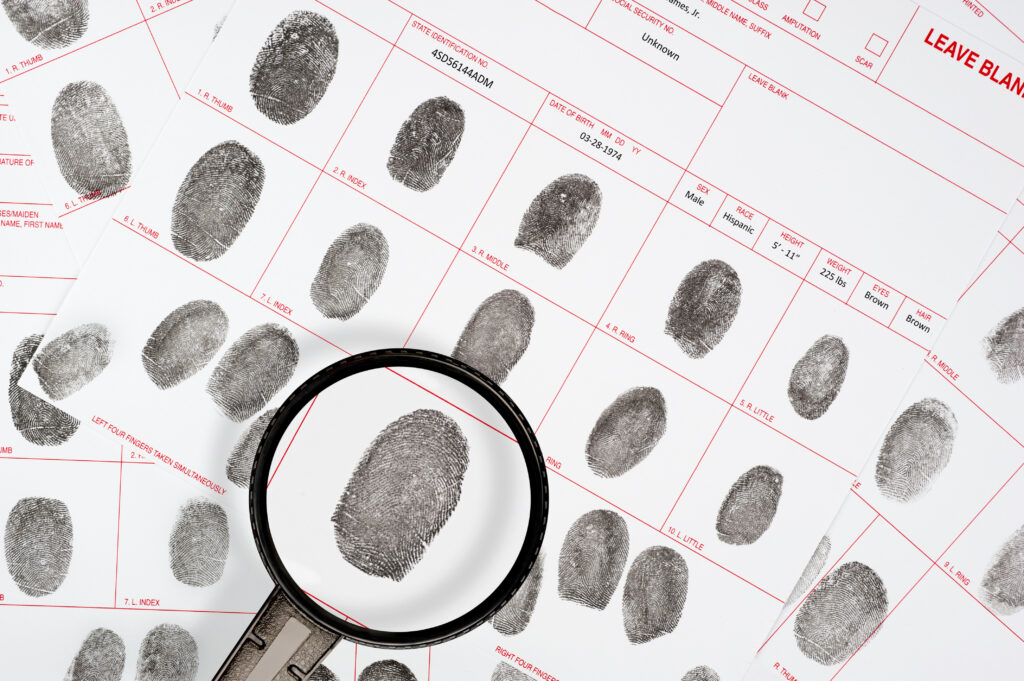
2) Fingerprints that pass first-time (FD-258 or live scan printed)
FBI acceptance hinges on quality. We capture FD-258 fingerprints—ink or live scan printed—under FBI specifications. On the spot, we check ridge clarity, roll consistency, and data completeness. Poor prints are the #1 preventable delay.
3) Obtain the FBI report via the appropriate route
We choose the route that aligns with your deadline and confirm the output is apostillable recognized by the U.S. Department of State. Not every generic PDF printout qualifies.
Timeline separation: The FBI report acquisition typically takes about two weeks. This is separate from the apostille timeline.
4) Prepare for federal apostille (U.S. Department of State)
For an FBI document, apostille requires:
Forms filled correctly and categorized as a federal document,
an apostillable FBI report (verified by us),
compliant payment and return labeling, and
packaging that routes directly to the Office of Authentications.
Disciplined preparation here prevents the quiet time drains: resubmissions, missing fields, and misrouted envelopes.
5) Tracking, exception handling, and delivery
We track milestones (shipment, intake, processing, issuance, outbound). If something looks off, we intervene early. Upon return, we perform a quality check—names, seals, certificate references—and deliver to you, your HR team, or directly to a consulate if required.
Apostille timeline: We manage an apostille turnaround of around two weeks for FBI background checks.
Why a Apostille de La Haya model is faster (and safer)
Fewer handoffs, fewer errors. We own fingerprints, report routing, apostille, and logistics—so nothing falls between the cracks.
Authority-correct submissions. Federal vs. state is settled at intake, avoiding instant rejections.
Apostillability verified up front. We confirm the FBI report format meets DoS expectations before we submit DS-4194.
Operational discipline. Checklists, dual reviews, and documented chain of custody turn “expedite” into a repeatable outcome, not a hope.
Data protection. Biometrics and are handled under least-privilege access, with audit trails and retention/destruction policies.
Practical pointers that genuinely speed things up
Align identity data across all artifacts.Names (including hyphens/accents), DOB, and ID/passport numbers must match exactly across FD-258, the FBI request, the report, and DS-4194. We normalize one canonical format and hold the line.
Insist on an apostillable FBI output.Some outputs carry certifiable signatures that the DoS recognizes; some do not. We verify and, if needed, secure the correct version before apostille submission.
Use the right authority the first time.FBI → U.S. Department of State. State records → state Secretary of State. Mixing levels guarantees returns.
Plan translation in the proper order.If your destination requires translation, it typically happens after the apostille and often must be performed by a sworn translator in the destination country. We coordinate so nothing idles.
Ship with tracking; keep controlled copies.We maintain high-resolution scans, track every courier leg, and protect your PII.
Common blockers—and how we pre-empt them
Smudged or low-quality prints → We re-roll immediately and quality-check in session.
Wrong document level (state vs. federal) → We confirm the requirement before fingerprints.
Non-apostillable FBI report output → We require and verify a certifiable version.
DS-4194 errors → We run a dual-review checklist before submission.
Name mismatches → We standardize your identity string early and keep it consistent.
Translation done too soon → We sequence after apostille unless local rules dictate otherwise.
Each one of these can cost days or weeks if not handled proactively.
“Expedite” scenario from the field
Healthcare volunteer deployment
With a narrow start window, we aligned the quickest valid route for the report, prepared DS-4194 precisely, and coordinated courier tracking door to door. The document set arrived ready for intake.
Step-by-step summary (your expedited roadmap)
Scope correctly: confirm apostille (Hague) vs. legalization (non-Hague) based on destination.
Lock the document level: FBI (federal) vs. state.
Fingerprint capture: FD-258 ink or live scan printed, with on-site quality verification.
Request the FBI report via the route aligned to your timing (FBI Direct or Channeler).
Verify apostillability of the FBI output; secure the certifiable version.
Prepare DS-4194 with accurate categories, payment, and return logistics.
Submit to the U.S. Department of State (Office of Authentications).
Track and intervene early if exceptions arise.
Quality-check the apostille upon return (names, seals, certificate references).
Deliver where needed (you, HR, consulate) and coordinate translation after apostille if required.
Follow this, and “expedite” becomes the default outcome—not an exception.
Provider checklist for “FBI background check apostille expedite”
When you evaluate a partner, verify that they:
Capture FD-258 fingerprints (ink or live scan printed) with immediate quality checks.
Understand the difference between federal and state apostilles and route accordingly.
Verify the apostillability of the FBI report output before submission.
Prepare and file DS-4194 correctly to the Office of Authentications.
Use tracked logistics and share status milestones with you.
Operate with documented privacy and data-security practices for biometrics and PII.
Can coordinate translation in the correct sequence when required.
Provide references or case examples for your specific destination or use case.
Apostille de La Haya specialize in precisely these controls, which is why timelines hold and documents pass inspection the first time.
Need fbi background check apostille expedite
with one accountable team from fingerprints to final delivery? Partner with Apostille de La Haya. We secure an apostillable FBI report, prepare DS-4194 flawlessly, and manage the apostille timeline of around two weeks—with the FBI background check certificate typically requiring an additional ~two weeks to obtain. Get a scoped plan and a reliable schedule so your next milestone isn’t at risk.
Frequently asked questions
Do FBI reports need state apostille?
No. FBI reports are federal and are apostilled by the U.S. Department of State. State apostilles apply to state documents.
Can I apostille a printed copy of the FBI PDF?
Only if that output includes certifiable elements recognized by the U.S. Department of State. We check and obtain the correct version as needed.
How long does this take?
Two distinct windows:
FBI background check certificate: typically about two weeks to obtain.
Apostille for the FBI report: around two weeks for our managed submissions.
These are separate timelines.
Legal Notice
The information contained in this publication is provided for general informational purposes only and does not constitute legal advice. Reading or using this content does not create and is not intended to create an attorney-client relationship. No reader or user should act or refrain from acting based on the information presented herein without first consulting an attorney duly licensed to practice law in their jurisdiction.