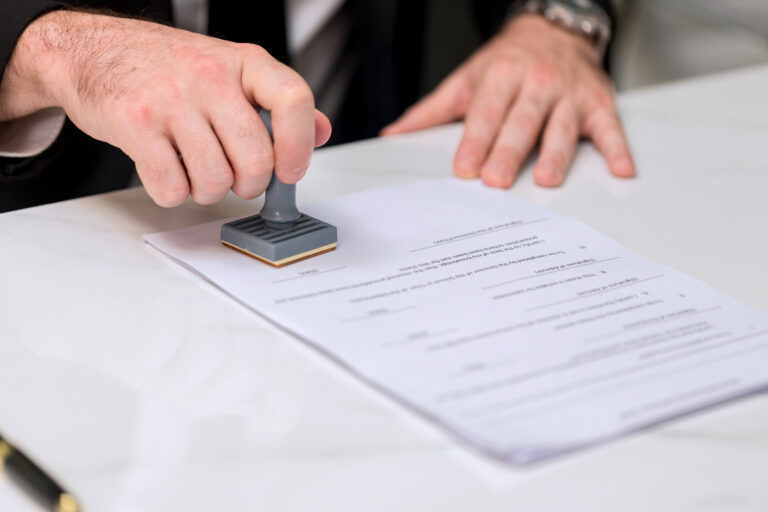
If you’re googling fl dept of state apostille, you’ve probably hit a swirl of half-explanations and conflicting checklists. Let’s flatten it. In Florida, an apostille (or authentication) is issued by the Florida Department of State in Tallahassee and is used to make your document legally acceptable in another country. The right path depends on what the document is and where it’s going.
This guide walks you—plainly—through the Florida-only workflow, the document types that qualify, and the exact steps to keep your file from bouncing. Throughout, you’ll see where Apostille de La Haya plugs in: we can handle everything, from notarization (including remote online notarization where appropriate) to the apostille request with the Florida Department of State, plus tracking, translations, and final delivery.
What an Apostille Is (and When Florida Is the Right Issuer)
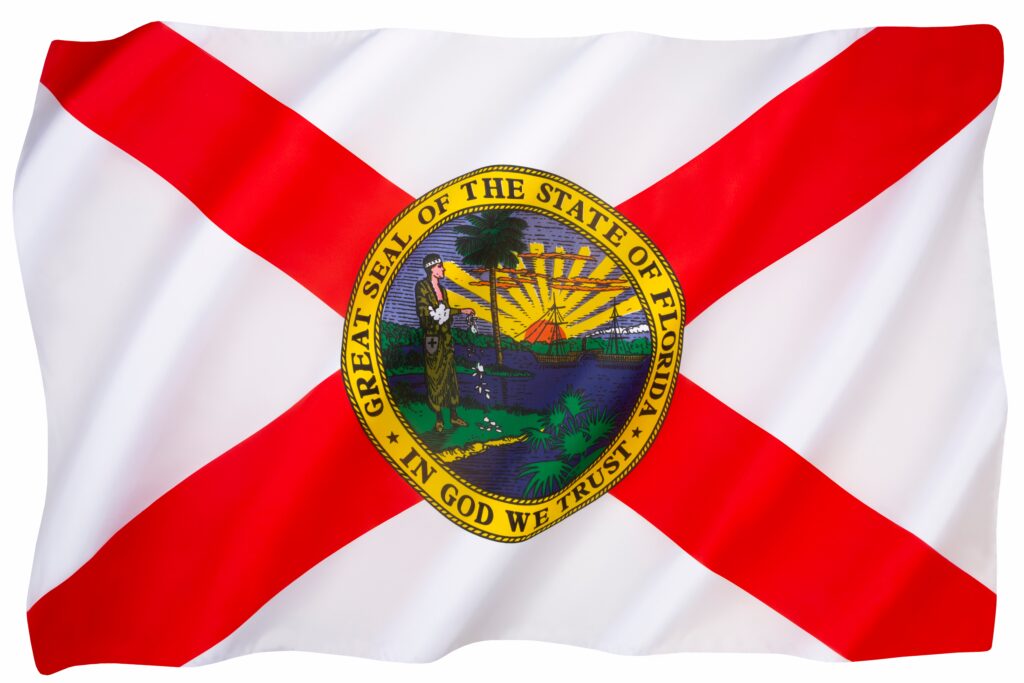
An apostille is an international certificate that authenticates the signature and authority on a public document so it can be recognized in another country that’s party to the Hague Apostille Convention. If the destination country isn’t in the Convention, Florida issues a Certification/Authentication (sometimes called a “Great Seal”), and then you typically continue with the foreign embassy or consulate.
Florida is the right issuer if the underlying document is:
Executed or certified by a Florida official (e.g., county clerk, Clerk of Court, State Registrar), or
Notarized by a Florida notary in good standing.
If your document is federal (e.g., an FBI letter), Florida cannot apostille it; that goes to the U.S. Department of State in Washington, D.C. For other U.S. states’ documents, you go to that state’s competent authority—not Florida. Apostille de La Haya sanity-checks jurisdiction up front so you don’t ship to the wrong office.
Apostille vs. Authentication (Certification)
Apostille: use when the destination country is in the Hague Apostille Convention.
Authentication/Certification: use when the destination is not a Hague country; after Florida’s certificate, you’ll proceed to the foreign embassy/consulate.
Apostille de La Haya confirms the destination path and prints the exact country of use on the request so Tallahassee knows which certificate to issue.
Document Types: What Florida Will (and Won’t) Apostille
Here’s the Florida-centric breakdown. It matters because each class has its own preparation rules.
1) Vital Records (Birth, Death, Marriage, Divorce)
Must be certified copies issued by the Florida Department of Health – Bureau of Vital Statistics or the relevant county office that Florida recognizes.
Photocopies and hospital “souvenir” records won’t fly.
If you don’t have the right kind of certified copy, we can help you obtain one before apostille.
2) Court Documents (Judgments, Orders, Name Changes)
Must be certified by the Clerk of Court (raised seal or embossed stamp, certification statement, and signature).
We can retrieve certified copies from many Florida courts on your behalf.
3) Educational Records (Diplomas, Transcripts, Letters)
Florida generally requires either:
a) a document signed by a school official (registrar, dean) whose signature is notarized by a Florida notary, or
b) a notarized affidavit from a custodian of records attesting to the copy’s authenticity.We coordinate the notarization for the registrar’s statement (in-person or remote where permitted and acceptable to the destination).
4) Corporate and Business Records
Documents issued by the Florida Department of State – Division of Corporations (e.g., Certificates of Status/Good Standing, certified copies of filings) are typically apostillable as-is.
If you need something notarized—such as a director’s resolution or an officer’s affidavit—we handle the notarization and then the apostille.
5) Notarized Personal Documents
Powers of attorney, consent letters, affidavits, travel permissions, invitations, etc., can be apostilled if they are properly notarized by a Florida notary with a complete notarial certificate (acknowledgment or jurat), venue, date, stamp, and signature.
Apostille de La Haya ensures the notarial wording matches Florida law and is acceptable for international use.
Key principle: Florida verifies the notary or public official’s signature—not the truth of the content. Your content stays your responsibility; the apostille certifies the signature and capacity of the signer.
The Florida Process (Start to Finish) — Managed by Apostille de la Haya
Think of this as a small logistics project. We keep each link of the chain tight so you don’t lose days to trivial errors.
Step 1: Destination Diagnostic (Hague vs. Non-Hague)
We confirm whether your destination uses apostille or requires authentication + consulate. This determines the certificate Florida issues and what comes next.
Step 2: Document Class & Readiness
We identify the class (vital, court, education, business, notarized personal) and confirm what prework is needed:
Certified copy retrieval (vital/court/corporate),
Registrar letter or custodian affidavit for diplomas/transcripts,
Proper Florida notarization for personal or academic documents.
Step 3: Notarization (In-Person or Remote Online, Where Allowed)
As a full-service provider, Apostille de La Haya performs:
In-person notarization in Florida,
Remote Online Notarization (RON) for eligible documents, compliant with Florida law,
Drafting translator affidavits and notarizing the translator’s signature if you need a translated version (many countries require the translation to be notarized and then apostilled).
Note: some foreign authorities still prefer wet-ink notarizations. We advise based on destination practice.
Step 4: Quality Control — The “Apostille-Ready” Check
We review your packet to ensure:
Proper notarial certificate (venue, date, acknowledgment/jurat, notary signature and stamp, match to notary commission),
Names and identifiers consistent across the document and request,
Certified copy meets Florida’s standards (for vital/court/corporate),
No staples removed or seals damaged,
Country of use is spelled exactly as it should appear on the Florida request.
Step 5: Submission to the Florida Department of State
We prepare the Florida apostille/authentication request, package the documents, include the correct fee per document, and file the application in Tallahassee by mail or courier. For higher-volume or time-sensitive matters, we coordinate courier handling and tracked returns.
Step 6: Tracking, Escalation, and Exceptions
We monitor delivery, intake, and issuance. If Florida flags an issue—e.g., an incomplete notarial certificate, an unrecognized signature, or a wrong document type—we fix it fast. Our team holds alternate copies, coordinates with the notary, or obtains replacement certifications without delay.
Step 7: Return, Final QC, and Delivery
When the apostilled (or authenticated) set comes back:
We verify the certificate (apostille vs. authentication), the name of the country, the public official reference, and the binding.
We digitize scans for your records and deliver the physical originals per your instructions—back to you, to your attorney, or straight to a consulate or foreign authority.
Optional Step 8: Translation & Consular Follow-Through
For apostille destinations that still request a sworn translation, we coordinate a translator’s affidavit and notarization, then a second apostille if the destination requires the translation to carry its own apostille.
For non-Hague destinations, we guide the consular legalization that follows Florida’s authentication.
Florida-Specific Pitfalls We Prevent
Wrong jurisdiction: Sending a federal document (e.g., FBI letter) to Florida. Federal documents go to the U.S. Department of State, not Tallahassee.
Incomplete notarial wording: Missing venue, missing acknowledgment/jurat, or a notary stamp that’s smudged or expired.
Unacceptable vital record copies: Hospital keepsakes or uncertified photocopies aren’t valid for apostille. You need a certified record.
Educational records without proper attestation: A diploma alone often isn’t enough; a registrar’s notarized letter or a custodian affidavit is the clean path.
Detached staples or damaged seals: Re-stapling a certified set can invalidate it. Keep the physical integrity intact.
Wrong certificate request: Listing a non-Hague country for apostille, or vice versa, causes rework. We double-check country status and ask Florida for the correct certificate.
How Apostille de La Haya Makes This Easy
We run the whole show with compliance discipline:
Notarization done right (in-person or RON where appropriate),
Certified copy retrieval from Florida agencies/courts when needed,
Apostille/authentication filing in Tallahassee with correct fees and forms,
Tracking both ways and timestamped chain of custody,
Exception handling fast (we keep alternates ready),
Translations & translator affidavits, if your destination requires them,
Consular legalization for non-Hague countries,
Final delivery to you or the requesting authority.
You get one accountable team—no handoffs to coordinate, no alphabet soup to decode.
Use Cases (What This Looks Like in Real Life)
University Admission in Spain (Hague)
Documents: diploma + transcript from a Florida university.
Our approach: registrar’s notarized letter verifying authenticity of records → Florida apostille → delivery to student and admissions office. No returns.
Marriage Certificate for Italy (Hague)
Document: certified Florida marriage certificate.
Our approach: QC the certificate, request apostille from Florida DoS, then coordinate a sworn translation in Italy (as local authorities often require)—in the right order.
Power of Attorney for Property Sale in Latin America
Document: POA drafted in English and Spanish, signer in Florida.
Our approach: in-person or RON notarization (depending on the receiving authority’s preference), Florida apostille, courier delivery to the foreign notary/attorney.
Why Choose Apostille de La Haya
One accountable team: notarization → Florida apostille/authentication → tracking → delivery.
Florida expertise: we work with Florida notarial rules and DoS practices every day.
Document retrieval: vital records, court certifications, Division of Corporations certificates.
Destination awareness: apostille vs. authentication and correct translation order.
Security & compliance: least-privilege access, chain of custody, retention/destruction policies.
Communication: clear milestones, fast exception handling, and practical guidance.
You focus on your move, your enrollment, your case. We’ll focus on the paperwork opera.
Need a fl dept of state apostille without the guesswork? Apostille de La Haya can handle the entire process—from notarization (in-person or remote, as appropriate) and certified copy retrieval, to the apostille/authentication request in Tallahassee, plus tracking, translations, and final delivery. Reach out today and get a clean, first-try acceptance.
Frequently Asked Questions
Can I use a hospital birth certificate for apostille?
No. You need a certified copy issued by the Florida Department of Health or an acceptable county authority.
Will Florida accept remote online notarization (RON)?
Florida law permits RON, but your destination country or specific agency may not accept it. We’ll advise whether to use wet-ink to avoid complications.
Do I need to translate before or after the apostille?
Usually after apostille. Many countries also require a sworn translator in the destination country. We help you sequence this correctly.
Can Apostille de La Haya retrieve documents for me?
Usually after apostille. Many countries also require a sworn translator in the destination country. We help you sequence this correctly.
The information contained in this publication is provided for general informational purposes only and does not constitute legal advice. Reading or using this content does not create and is not intended to create an attorney-client relationship. No reader or user should act or refrain from acting based on the information presented herein without first consulting an attorney duly licensed to practice law in their jurisdiction.