
If you’re searching for FBI background check apostille processing time, you almost certainly have a deadline and a simple question: how long will this actually take? The honest answer is that there are two separate clocks running, and confusing them is the fastest way to miss a date. First, obtaining the FBI Identity History Summary (the federal criminal record) takes its own window. Second, apostilling that report through the U.S. Department of State takes a distinct window on top of it. This guide breaks down each timeline, what drives it, and how to compress the parts that are actually within your control.
Timeline note: We manage an apostille turnaround of around two weeks for FBI background checks. Obtaining the FBI background check certificate itself typically requires a separate window of approximately two weeks. These timelines are distinct and should be planned as two stages, not one.
How Long Does an FBI Background Check Apostille Take?
The total time from start to finish is the sum of two independent stages, which is why a single «how long does it take» number is misleading. Stage one is getting the FBI report; stage two is apostilling it. Each has its own processing window, its own authority, and its own set of variables. When people are surprised by delays, it is almost always because they planned for one stage and forgot the other, or because a preventable error forced them to restart the first stage.
Stage One: Getting the FBI Identity History Summary
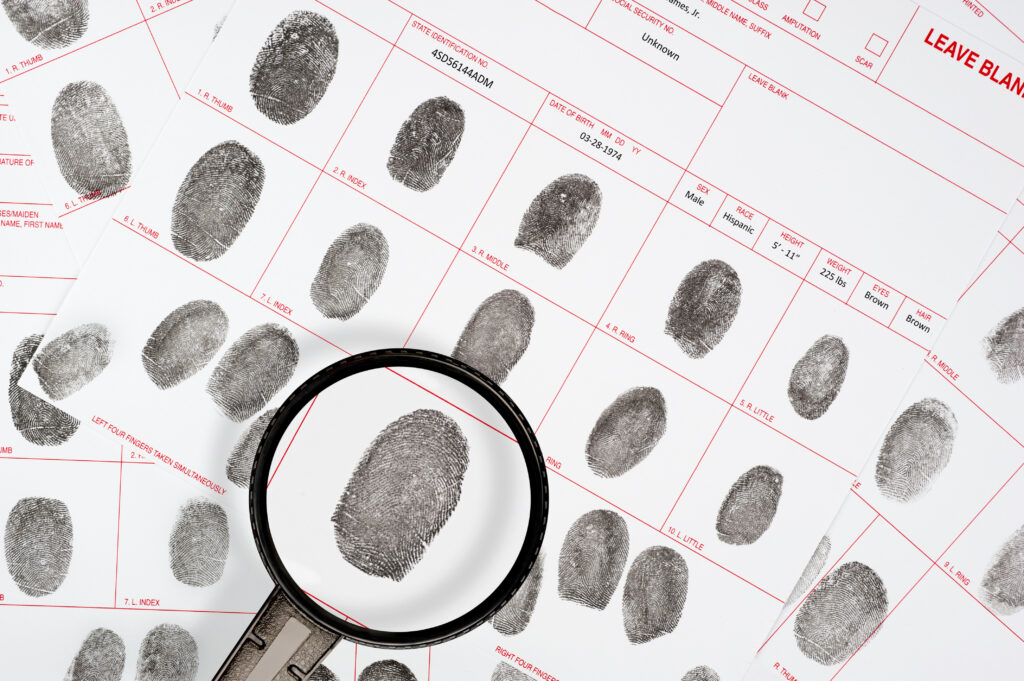
Before anything can be apostilled, you need the FBI report itself. This stage begins with capturing your fingerprints and submitting them, either directly to the FBI’s CJIS Division or through an FBI-approved Channeler. Channelers typically return results faster than direct submission, which is why the choice of channel is one of the biggest levers on your total timeline. The single most common cause of delay at this stage is a fingerprint rejection: a smudged, over-inked, or poorly rolled print sends you back to the start. Clearing the fingerprint capture on the first attempt is the difference between a predictable two-week window and an open-ended one.
Stage Two: Apostilling the Report
Once you hold an apostillable FBI report, the second clock starts. Because the FBI report is a federal document, its apostille is issued by the U.S. Department of State — not by any state Secretary of State. This stage involves preparing the correct request form, submitting it to the Office of Authentications, and receiving the finished apostille back. The processing time here depends on the volume the office is handling, whether your submission is defect-free, and the logistics of getting the document to and from Washington. A single formatting error or a wrong destination country named on the form can bounce the submission and reset this window.
What Determines Your Processing Time
Processing time is not a fixed number handed down from an agency; it is the result of several factors, most of which can be managed:
- Channel choice: an FBI-approved Channeler generally returns the report faster than direct CJIS submission.
- Fingerprint quality: prints that clear on the first attempt avoid a full restart of stage one.
- Apostillability of the report output: the report must contain the certifiable elements the Department of State recognizes.
- Submission accuracy: correct forms, correct fees, and the correct destination country prevent rejections.
- Logistics: tracked, proactive shipping in both directions removes idle days that no one is watching.
- Seasonal volume: peak periods lengthen the authority’s own turnaround, independent of your paperwork.
How to Speed Up Each Stage
«Expediting» an FBI apostille is not a magic switch; it is the disciplined elimination of rework and idle time. On stage one, that means capturing high-quality fingerprints and choosing the fastest legitimate channel so you clear the FBI on the first pass. On stage two, it means securing an apostillable report output, preparing a defect-free submission, and using tracked logistics with proactive monitoring so nothing sits unattended. The gap between «fast» and «fast enough to land on time» is almost entirely about doing each step right the first time. That is precisely the discipline Apostille de La Haya brings to every case.
Realistic Planning: Build In a Buffer
Because two independent windows stack on top of each other, the smartest move is to plan for the combined timeline and add a modest buffer for the variables you cannot control, such as seasonal volume at the Department of State. If your document also needs a certified translation for the destination country, that step must be sequenced correctly and adds time as well. Rather than gambling on a best-case scenario, we give you a realistic combined window after reviewing your specific case, so you can commit to a deadline abroad with confidence instead of hope.
FBI vs. State: Why the Authority Changes the Timeline
One of the most consequential facts about processing time is that the FBI report and state-issued documents travel through entirely different authorities, and that difference shapes how long everything takes. An FBI Identity History Summary is a federal document, so its apostille comes from the U.S. Department of State. A state-issued police or background document, by contrast, is apostilled by that state’s Secretary of State. These offices have different workflows, different volumes, and different turnaround patterns. If you accidentally route a federal document to a state office (or the reverse), the submission is rejected outright and you lose the entire window. Getting the authority right on the first attempt is not a detail — it is one of the largest single factors in your overall processing time.
Common Delays and How to Avoid Them
Most of the time lost in an FBI apostille is not spent in official processing at all; it is spent redoing steps that were done wrong. Recognizing the usual culprits lets you sidestep them:
- Fingerprint rejection: the leading cause of stage-one delay. Prevent it with high-quality capture and, where possible, live scan.
- Non-apostillable report output: not every version of the report carries the elements the Department of State certifies. Confirm before submitting.
- Form errors: an incorrect fee, a missing signature, or the wrong destination country named will bounce the request.
- Untracked shipping: documents that sit in transit with no monitoring add invisible days to your timeline.
- Out-of-sequence translation: translating before or after the wrong step can force a redo. It must be ordered correctly.
Can You Track the Status Along the Way?
A major source of anxiety around processing time is simply not knowing where your document is. Both stages benefit from proactive status monitoring: knowing when the FBI has received and processed your fingerprints, and knowing when your apostille request has reached the Office of Authentications and when it has shipped back. When each milestone is tracked and shared, you can plan the downstream steps abroad instead of guessing. Apostille de La Haya keeps you informed at each handoff, so the timeline stays transparent from fingerprints to finished apostille.
When Should You Start the Process?
Given two stacked windows plus a buffer, the practical rule is to start earlier than feels necessary. If a foreign employer, university, or authority has given you a submission deadline, count backward: allow for the FBI report window, the apostille window, any translation, and international shipping to the destination. Starting late is the one variable entirely within your control that most often causes missed deadlines. If your timeline is already tight, that is exactly when disciplined, error-free processing matters most — and where working with a specialist who manages both stages end to end protects your date.
Why Rework Is the Real Enemy of Your Timeline
When people picture a slow apostille, they imagine a document sitting in a government queue. In reality, the biggest time losses come from rework, not from official processing. A rejected fingerprint card does not just cost the day it was rejected; it costs the full time to schedule, recapture, resubmit, and wait again. A bounced apostille request does not just lose the review — it loses the shipping in both directions plus the resubmission window. Every avoidable error effectively duplicates a stage. That is why the fastest processing time is almost always achieved by the party that makes the fewest mistakes, not the one that pushes hardest for speed. Quality control at each step is, paradoxically, the true accelerator.
FBI Report vs. Local Police Certificates
It is worth clarifying a distinction that frequently derails timelines: the FBI Identity History Summary is a nationwide federal record, while a local or state police certificate reflects only a specific jurisdiction. Some destination countries specifically require the federal FBI version, others accept a state-level certificate, and a few ask for both. Because each type is apostilled by a different authority and moves on a different clock, submitting the wrong document for your destination means starting the entire sequence over. Confirming exactly which certificate your destination expects — before you begin — is one of the simplest ways to protect your overall processing time.
The Bottom Line on Processing Time
There is no single magic number for how long an FBI background check apostille takes, because the answer is the sum of two separate, manageable stages plus the buffer you build in for the variables you cannot control. What you can control — the channel you choose, the quality of your fingerprints, the accuracy of your submission, and the discipline of your logistics — determines whether you land near the fast end of the range or lose weeks to avoidable rework. Plan for both windows, start early, route each document to the correct authority, and let a specialist manage the handoffs so your timeline stays predictable from the first fingerprint to the finished, internationally valid apostille.
Provider checklist for a predictable FBI apostille processing time
Processing time is only as dependable as the team managing each handoff. Before you commit, confirm your provider can:
Give you a written, stage-by-stage timeline (fingerprints → FBI report → DS-4194 → Department of State → return delivery) with realistic dates rather than vague promises.
Capture FD-258 fingerprints (ink or live scan) with first-pass quality checks, so a rejection never resets your clock.
Confirm the FBI report is issued in an apostillable format before it reaches the Office of Authentications.
Identify federal vs. state routing up front, since a misrouted document quietly adds weeks.
Prepare and file DS-4194 without defects — the single most common cause of avoidable delay.
Track the package in transit and report each milestone, so idle time stays visible and accountable.
Handle biometrics and PII under documented privacy and data-security controls.
Sequence any required translation correctly so it never becomes a last-minute bottleneck.
When every stage is scheduled and every handoff is owned, the total processing time collapses toward its natural minimum instead of drifting.
Need a reliable FBI background check apostille processing time
with one accountable team from fingerprints to final delivery? Partner with Apostille de La Haya. We secure an apostillable FBI report, prepare DS-4194 flawlessly, and manage the apostille timeline of around two weeks—with the FBI background check certificate typically requiring an additional ~two weeks to obtain. Get a scoped plan and a realistic schedule so your next milestone isn’t at risk.
Frequently asked questions
Do FBI reports need state apostille?
No. FBI reports are federal and are apostilled by the U.S. Department of State. State apostilles apply to state documents.
Can I apostille a printed copy of the FBI PDF?
Only if that output includes certifiable elements recognized by the U.S. Department of State. We check and obtain the correct version as needed.
How long does this take?
Two distinct windows:
FBI background check certificate: typically about two weeks to obtain.
Apostille for the FBI report: around two weeks for our managed submissions.
These are separate timelines.
Legal Notice
The information contained in this publication is provided for general informational purposes only and does not constitute legal advice. Reading or using this content does not create and is not intended to create an attorney-client relationship. No reader or user should act or refrain from acting based on the information presented herein without first consulting an attorney duly licensed to practice law in their jurisdiction.