Notary Public Center · American Notary
Florida Notary Public Services: What to Know Before You Sign
Published
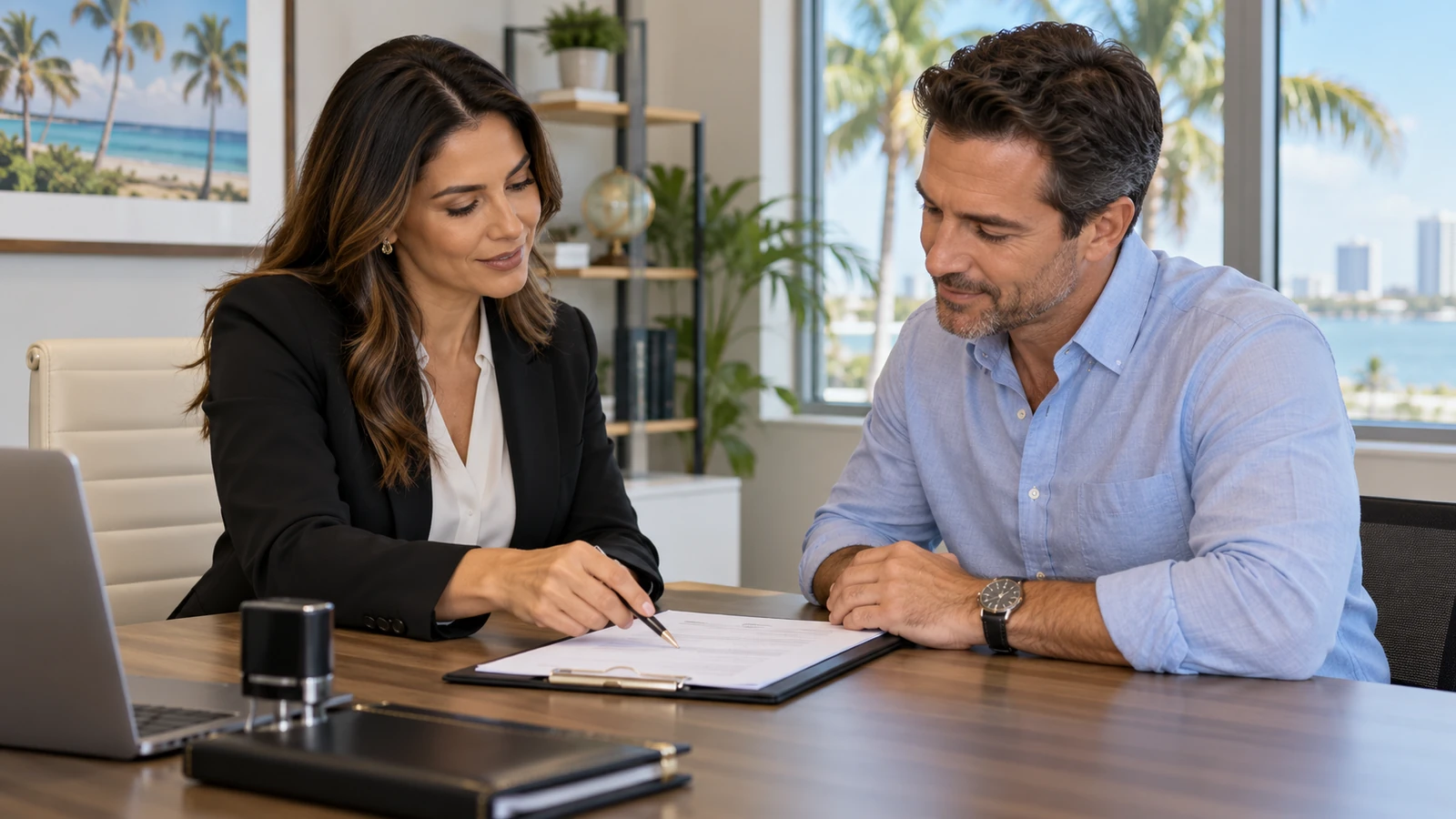
A Florida notary public performs authorized notarial acts, including taking acknowledgments and administering oaths or affirmations. The notary identifies the signer as required, completes the appropriate certificate and follows Florida law. The notarial act does not mean the notary has approved the document’s legal terms or verified every statement in it.
Whether you need an in-person appointment, a mobile notary or remote online notarization depends on the document and the recipient’s requirements. Some documents require witnesses or a particular delivery format. Others may not be suitable for the method the signer prefers.
Notary Public Center can discuss its available services and the information needed for an appointment. If you need advice about the document’s legal effect, consult an attorney licensed in the relevant jurisdiction.
What a Florida notary public can do
A Florida notary may perform the notarial acts authorized by state law. Common requests include an acknowledgment of a signature and a jurat involving an oath or affirmation. Florida also permits other specified acts, subject to the applicable requirements and limits.
The notary must determine whether the requested act can be performed and whether the statutory requirements are met. Depending on the circumstances, this can include the signer’s presence, identification, willingness and completion of a notarial certificate. An unavailable signer or an unresolved identification issue may prevent the act.
A notary who is not a licensed attorney cannot provide legal advice or select legal documents for a customer. The signer should ask the receiving institution or a qualified attorney which document and notarial act are required. The notary can explain the available acts without deciding that legal question for the signer.
Acknowledgment or oath: why the distinction matters
An acknowledgment involves the signer acknowledging execution of a document to the notary. The law governing the act determines the applicable presence, identification and certificate requirements. The document and the recipient may specify that an acknowledgment is needed.
A jurat involves an oath or affirmation and the signer’s execution of the document in the notary’s presence under the applicable rules. An oath generally refers to a solemn promise invoking a higher power; an affirmation is a solemn promise without that religious form. Both must be treated seriously.
The certificate records which act the notary performed, so its wording matters. If a form lacks a certificate or the instructions are unclear, ask the recipient or an authorized attorney. Do not ask the notary to choose the legal effect of a certificate for you.
Identification at a Florida notary appointment
Florida law requires the notary to identify the signer through personal knowledge or satisfactory evidence as defined by the applicable statute. The acceptable evidence and conditions depend on the type of identification and the act. A service can ask about identification before the appointment to determine whether the notary can proceed.
The name on the identification should be considered alongside the name in the document. A difference does not always have the same explanation or solution, so discuss it with the service and recipient rather than assuming it can be ignored. The notary must be satisfied that the signer is the person described in the document under the applicable rules.
For an online act, Florida imposes additional identity-verification procedures. Some signers may encounter difficulties with a particular verification method or available records. Ask the service about your circumstances before scheduling, especially when the signer is outside the United States.
Our identification checks guide explains why this step matters.
In-person appointments and mobile services
At an in-person appointment, the signer appears before the notary. Bring the document, identification and any instructions from the recipient. If the document requires witnesses, arrange them or confirm in advance whether the service can help coordinate them.
A mobile notary travels to an agreed location when that service is offered and the act can be performed there. The location does not remove the notary’s duties concerning presence, identification or the certificate. Explain the location and the number of participants when requesting the appointment.
A hospital, care facility or private residence may have access rules or other practical conditions. Ask the facility and the service provider what arrangements are needed. The notary must still assess whether the signer can communicate, is willing to sign and the act can be completed under the applicable law.
Remote online notarization in Florida
Florida allows qualifying online notaries to perform remote online notarizations using audio-video communication and procedures required by law. The notary must be registered as an online notary and physically located in Florida when performing the act. The principal and witnesses may be elsewhere when the applicable requirements are met.
The process includes identity verification and a recording of the required audio-video session. The notary must complete an electronic notarial certificate that identifies the act as an online notarization as required by Florida law. A service provider’s platform supports the process but does not replace the notary’s responsibilities.
Not every recipient accepts an electronic record or remote notarization for every purpose. The document may also have special witness or execution requirements. Confirm the recipient’s instructions and discuss the document with the service before choosing a remote session.
The in-person and online notarization guide compares these appointment options.
What to do with an unsigned document
Review the document before the appointment and bring the complete version requested by the recipient. Depending on the notarial act, the signature may need to be made in the notary’s presence. If you are unsure, wait to sign until the notary explains the procedure for the requested act.
Do not leave material information blank with the expectation that the notary will decide what belongs there. If you do not understand the legal terms, seek advice before signing. A notary may explain the notarial process but cannot decide whether the agreement is appropriate for you.
The notary should be able to see the document and complete the certificate required for the act. Any questions about the correct certificate or document preparation should be resolved with the recipient or an authorized attorney.
Witnesses are separate from the notary’s role
Some documents require witnesses in addition to notarization. The number, qualifications and presence of witnesses depend on the document and applicable law. A notary’s seal does not automatically replace a required witness or correct a missing signature.
Florida law includes provisions for supervising the witnessing of electronic records during eligible online notarizations. Whether remote witnesses can be used for a particular record depends on the applicable rules and the document. Other jurisdictions or recipients may have additional requirements.
Tell the service in advance if witnesses are required and who will provide them. If the instruction is uncertain, ask the recipient or a licensed attorney. This is especially important for wills, powers of attorney and other documents with specific execution formalities.
Can a Florida notary notarize for a relative?
Florida law prohibits a notary from notarizing the signature of the notary’s spouse, son, daughter, mother or father. Other restrictions can apply when the notary has a financial interest in or is a party to the transaction. The relationship and the circumstances should be considered under the actual statute.
A sibling is not included in that specific list of prohibited relatives, but that does not remove the separate restrictions or resolve every conflict question. If independence or a financial interest is uncertain, discuss the situation with an appropriate professional and consider an unrelated notary.
Our article on family members and notarization explains the Florida distinction and why rules in other states may differ.
Copies, vital records and public documents
A Florida notary may attest certain copies under conditions set by law, but cannot simply attest a copy of a vital record or public record when the applicable rules require a certified copy from the custodian. A birth certificate or court record may need to come from the appropriate records office.
An official certified copy and a notarized statement about a copy are different. The recipient may require a particular form, and the issuing authority may have its own instructions. Ask what is required before relying on an ordinary photocopy.
A notary’s act does not change the source of an official record or automatically make it acceptable for an apostille. The Florida document services guide discusses how these services fit together.
Documents for use abroad
A notarized document intended for another country may need an apostille or a different authentication process, depending on the destination and the relevant public act. An apostille authenticates the origin of the signature or seal; it does not verify the truth of the document’s contents or guarantee acceptance.
The receiving authority may require a translation, an official certified record or a particular delivery format. Ask for its instructions before selecting electronic or paper notarization. Florida’s requirements for authentication can differ according to whether the document is notarized, issued by a state office or obtained from a records custodian.
Federal documents follow separate procedures when the federal official’s signature must be authenticated. A private notarial act concerning a document is not necessarily a substitute for that federal record. Confirm the appropriate route and do not assume one office can authenticate every kind of document.
When a notary may decline an act
A notary must comply with Florida’s requirements and may be unable to perform an act if the signer is absent, identity cannot be established under the applicable rules, or another legal restriction applies. The details depend on the situation and the requested act.
The notary must also consider whether the signer is acting willingly and whether communication permits the act to proceed. A person who is uncertain about the document’s legal consequences should have an opportunity to consult an attorney rather than be pressured to sign.
If an appointment cannot proceed, ask what factual or procedural issue needs to be addressed. Do not assume that another notary can lawfully ignore the same requirement. The receiving institution may also be able to clarify an unclear request.
Choosing a notary service
Start with the document, the signers and the recipient’s instructions. Ask whether the service offers the requested in-person, mobile or online appointment and whether it can accommodate any witness arrangements. Explain where the signers will be located and how the completed record must be delivered.
Confirm the service scope and the identification process. If the document will be used abroad, mention the destination and whether authentication or translation has been requested. Conditions depend on the nature and requirements of the case.
A notary service cannot promise that a bank, court or foreign authority will accept every document. It can explain the notarial process within its scope and direct legal questions to an appropriately licensed professional.
How Notary Public Center can help
Notary Public Center can discuss available in-person and remote online notarization services, appointment arrangements and related document coordination. Tell the team what document you have, who must sign and what the recipient has requested.
The notary evaluates whether the act can be performed under Florida law. The receiving institution determines whether the completed document meets its requirements. Legal advice about document preparation or effect should come from a licensed attorney.
Visit Notary Public Center or contact the team through WhatsApp to discuss your appointment.

Tell us about your document
Ask Notary Public Center about notarization options.
Frequently asked questions
Does a Florida notary verify that a document is legally valid?
A notary performs the requested notarial act under applicable law. The notary does not generally determine whether the document’s terms are legally sufficient or guarantee that a recipient will accept it.
Can I notarize a document online from outside Florida?
A qualifying Florida online notary physically located in Florida may perform an online act when the principal is elsewhere, subject to the law and circumstances. Confirm the recipient’s requirements before scheduling.
Do I always need witnesses?
No. Witness requirements depend on the document and applicable law. When witnesses are required, their participation is separate from the notarial act.
Can a notary certify a copy of a birth certificate?
A Florida notary cannot attest a vital-record copy in place of a certified record available from the appropriate custodian. Check the instructions for the specific record.
Can my spouse notarize my signature in Florida?
No. Florida law prohibits a notary from notarizing the signature of the notary’s spouse, as well as the signatures of certain other close relatives listed in the statute.
This article provides general information and is not legal advice. Consult a licensed attorney about your document and circumstances.
Notary Public Center · Contact
Tell us about your document
Ask Notary Public Center about notarization options.
Contact form

Professional background
Security consultant accredited by Colombia’s Superintendencia de Vigilancia y Seguridad Privada; forensic fingerprint examiner. A business administrator with a specialization in finance, he brings more than 27 years of experience protecting people, valuables and infrastructure. His career includes administrative and financial management at McKinsey & Company in Colombia and executive roles at multinational companies. As Partner and Senior Consultant at Compliance Officers, he applies that experience to background screening, due diligence and compliance.