Certificates for use abroad · Apostille de la Haya
Apostille certificates: prepare the right record
Published
Before requesting an apostille for a birth, marriage, academic or business certificate, establish which record the recipient needs and which authority issued it. Apostille de la Haya can help you organize the preparation and coordination around that specific document.
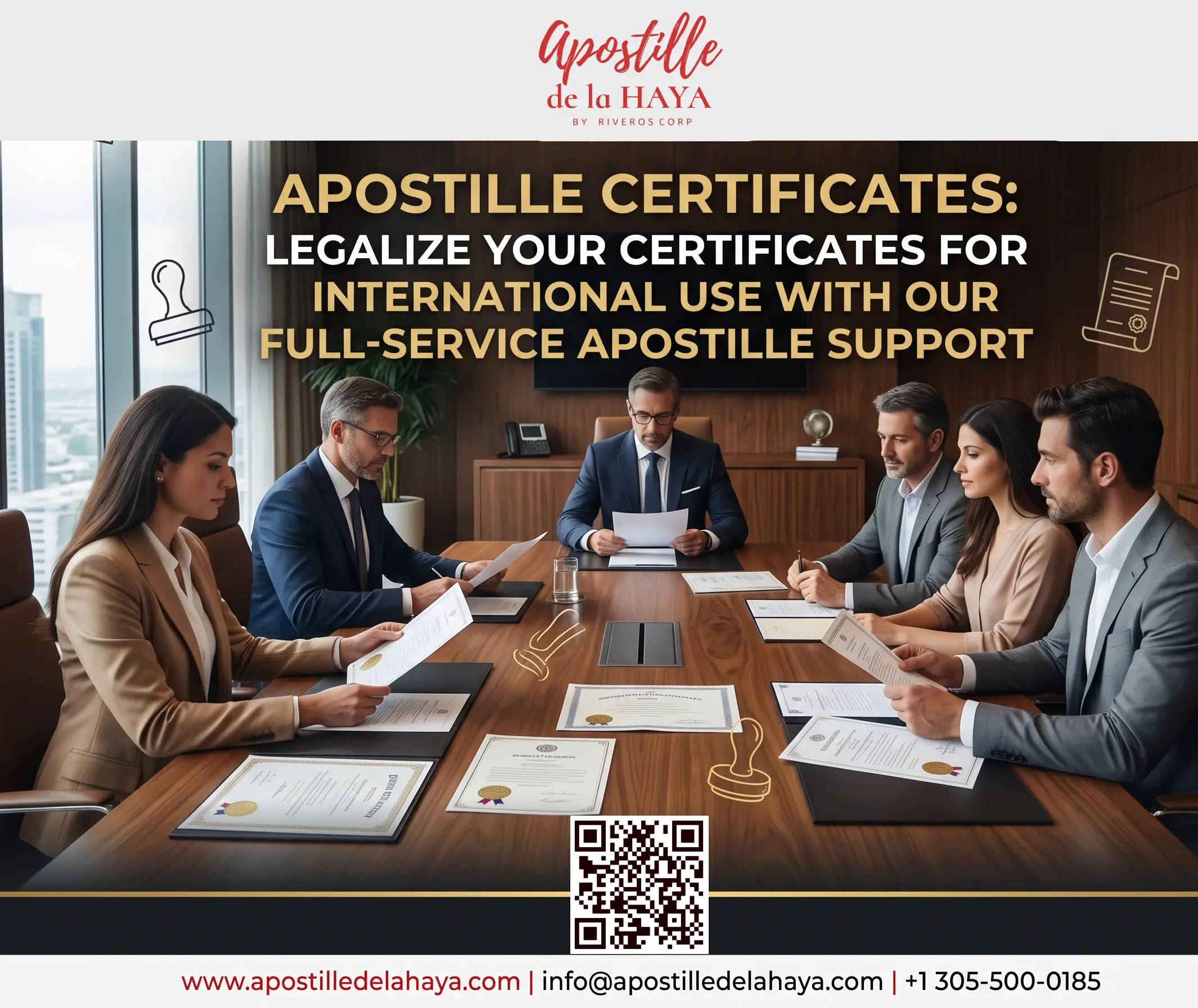
The right certificate comes before the certification process.
Before you start
Start with the record
Identify the certificate and its official issuer. An apostille is a separate certification; it does not replace a missing or unsuitable underlying record.
Confirm the destination
Ask the recipient what it requires for the intended procedure. The applicable apostille or legalization route depends on the document and its destination.
Check the version
A certified record, a photocopy and a notarized private statement are different. Confirm which form is appropriate before arranging submission.
01 / Your document
What is the difference between a certificate and its apostille?
Your underlying certificate records information such as a birth, marriage, qualification or company status. An apostille concerns the origin of a qualifying public document or official act. It does not correct the record or determine whether its contents meet a foreign institution’s requirements.
When requesting service, describe both what you have and what you have been asked to provide. “Apostille certificates” can refer to different records, and the preparation should follow the actual issuer and intended use.
02 / Your document
Which types of certificates need separate preparation?
Vital records
For birth, marriage or death records, establish the official custodian and the certified version available. A personal scan or commemorative certificate may not satisfy the procedure.
Academic records
Identify the school or university, the requested diploma or transcript and any registrar certification required. Ask the recipient whether it needs additional academic verification.
Business and court records
Distinguish an official company or court certificate from a privately signed contract or declaration. They may involve different signatures and preparation requirements.

Let’s review your document
Tell us what document you have, where it was issued and where you need to use it.
03 / Your document
Which authority handles the certificate?
Check the authority responsible for the record or official signature. State records and federal documents have different certification routes. A group of certificates from several issuers may therefore require more than one submission.
The destination also matters. Use the country guide as a starting point, and confirm the recipient’s request. Where the Apostille Convention does not apply, check the appropriate authentication or legalization procedure rather than ordering the same certificate for every destination.
04 / Your document
What should you check about copies and notarization?
The custodian’s certification
Check that the copy comes from the appropriate records office and meets the authority’s requirements. If the underlying information is wrong, ask that office about correction.
A notarial act
Private papers may need a suitable notarial act. Do not treat notarizing a photocopy as a universal substitute for obtaining an official record.
Separate attachments
Identify any translation, affidavit or additional statement. Clarify whether it is part of the underlying record or a separate document with its own requirements.
05 / Your document
How do you organize a certificate for apostille?
Confirm the requested record
Ask the receiving organization for its requirements, including the record type, language and any date condition.
Review the version you hold
Identify the issuer, certification and any missing pages. Obtain a different official version when the relevant instructions require it.
Plan the certification route
Check the competent authority and submission requirements. Discuss the preparation, fees and services that apply to your particular file.
Arrange the completed delivery
Confirm the recipient, return address and delivery format. Keep the certificate and its official attachments together as supplied.
06 / Your document
What should the service agreement cover?
Ask Apostille de la Haya which parts of preparation and coordination it can handle for your document. Discuss any notarization, translation, submission and delivery support separately, including what you must obtain from the original issuing office.
The service is private; the competent authority issues the apostille. Request a case-specific explanation of timing and costs instead of relying on one deadline for all certificates. Certification also does not guarantee the outcome of a marriage, citizenship, academic or business procedure.
07 / Your document
Questions about apostille certificates
No. The apostille concerns the origin of the qualifying public document or official act, including the relevant signature or seal. It does not correct errors in the underlying record or establish the truth of its contents. The receiving organization still evaluates the document for its intended use.
Do not assume that a photocopy is an acceptable substitute for a certified record from its official custodian. Check the requirements for the particular birth, marriage or death certificate. If you need a different version, obtain it through the appropriate issuing office before arranging the certification request.
No. The responsible authority depends on the origin of the document and the signature or official act involved. State and federal records follow different routes, and documents from several states may require separate submissions. Identify each issuer before choosing an office or combining documents into one request.
No. Some records need their issuer’s official certification rather than an added notarial act. Private documents may have different requirements. Tell the service exactly what you hold and check the competent authority’s instructions; unnecessary notarization should not be treated as a routine step for every government certificate.
That depends on the receiving organization’s requirements. Ask which parts must be translated, the required language and whether particular translator qualifications apply. Treat translation as its own preparation question. An apostille on the underlying certificate does not automatically certify a separate translator’s statement or replace the requested translation.
Ask the recipient whether its procedure requires a recently issued record. The age of the underlying certificate is a separate question from the certification of its origin. Avoid applying a universal three-month or six-month rule; confirm the requirement for your specific document, destination and intended use.
Discuss your location, where the certificate is held and the available delivery arrangements with Apostille de la Haya. The appropriate authority still depends on the document. Before sending anything, confirm the service scope, which physical records are required and where the completed package should be returned.
Identify the certificate, its issuing office, the destination country and the receiving organization. Mention which version you have, any existing certification and your deadline. Share the recipient’s written instructions through the agreed channel so the discussion addresses your actual record instead of a general checklist.
Apostille de la Haya · Contact
Review the certificate you need to use abroad
Contact Apostille de la Haya with the record’s issuer and the recipient’s instructions. Clarify the copy, certification route and service scope before submitting the document.
Tell us about your document
Related guides

Professional background
Security consultant accredited by Colombia’s Superintendencia de Vigilancia y Seguridad Privada; forensic fingerprint examiner. A business administrator with a specialization in finance, he brings more than 27 years of experience protecting people, valuables and infrastructure. His career includes administrative and financial management at McKinsey & Company in Colombia and executive roles at multinational companies. As Partner and Senior Consultant at Compliance Officers, he applies that experience to background screening, due diligence and compliance.
Official sources
Legal notice
The information contained in this publication is provided for general informational purposes only and does not constitute legal advice. Reading or using this content does not create and is not intended to create an attorney-client relationship. No reader or user should act or refrain from acting based on the information presented herein without first consulting an attorney duly licensed to practice law in their jurisdiction.