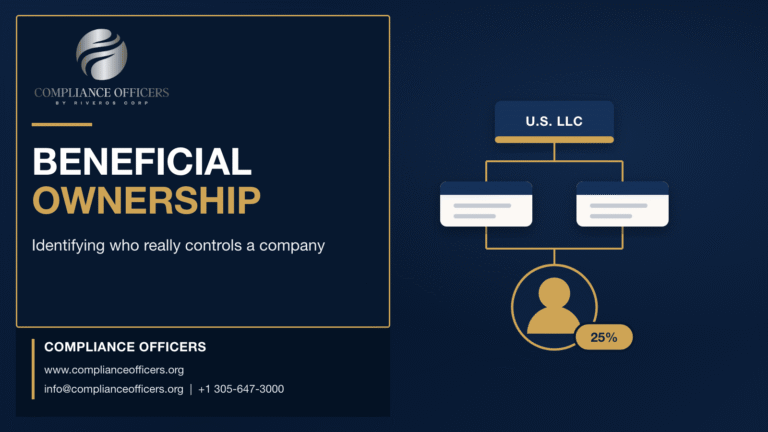
Somebody asks you to name the beneficial owner of a U.S. company and the request sounds like a single, answerable question. It is not. What a beneficial owner is depends on who is asking and under which rule — and most of the confusion in this field comes from two parties using one term with different thresholds in mind.
Background Checks · Due Diligence Services
If the person asking is a bank’s onboarding team, the definition that binds them sits inside the FinCEN Customer Due Diligence rule, and it binds a specific list of covered institutions. Knowing which rule the question comes from explains most of what lands in your inbox.
Once a background check is procured from a third party and used to decide about employment, credit, insurance or tenancy, the whole transaction becomes regulated.
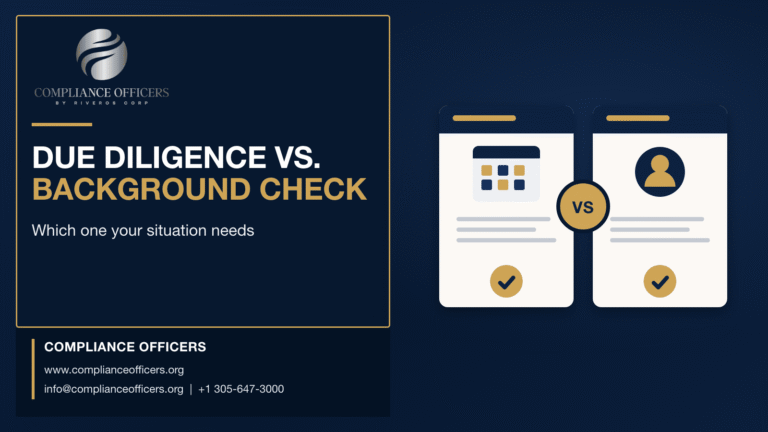
A background check: a search of defined scope about a natural person — identity, then criminal court records in named jurisdictions, registries, employment. It has an answer, and a defined end.
Due diligence: an open enquiry about a counterparty, its ownership, its record and its risk. There is no fixed list, because the question changes with the transaction.
The threshold that binds you comes from the rule the asker sits under. A bank’s onboarding team works from the FinCEN CDD Rule; a private counterparty does not.
Doing it without stalling the deal it is meant to protect.
The file
Four things this section settles
0
Universal definitions
There is no single U.S. definition of a beneficial owner. The binding one depends on the rule the asker sits under.
2
Different questions
Who this person is, and whether to do this deal. Depth does not turn one into the other.
4
Regulated uses
Employment, credit, insurance and tenancy. Deciding on any of them with a third-party check makes the transaction regulated.
CDD
The rule most often behind it
The FinCEN Customer Due Diligence rule binds a closed list of covered financial institutions.
Compliance Officers
The verification the file has to rest on
Due diligence is only as good as the records underneath it. Compliance Officers obtains the federal record checks and prepares the identity documentation a review needs, so the conclusions rest on documents rather than on assertions.