A consulate, a civil registry or an immigration office abroad asks for a marriage certificate apostille, and the request sounds simple until you open the drawer. There is a document at home with both signatures and an official-looking seal, and another copy somewhere from the county. Only some of them can legally carry an apostille — and the certificate itself is narrower than almost anyone expects: it authenticates the signature of the public official who issued the record, the capacity in which that person signed, and the identity of the seal. It says nothing about the marriage.
Apostille de la Haya · Marriage Certificate Apostille
And it does not compel anyone. The receiving office abroad still decides what it requires, and it can ask for a translation, a recent issue date or a registration step of its own. An apostille removes a bureaucratic obstacle to recognition; it does not manufacture recognition.
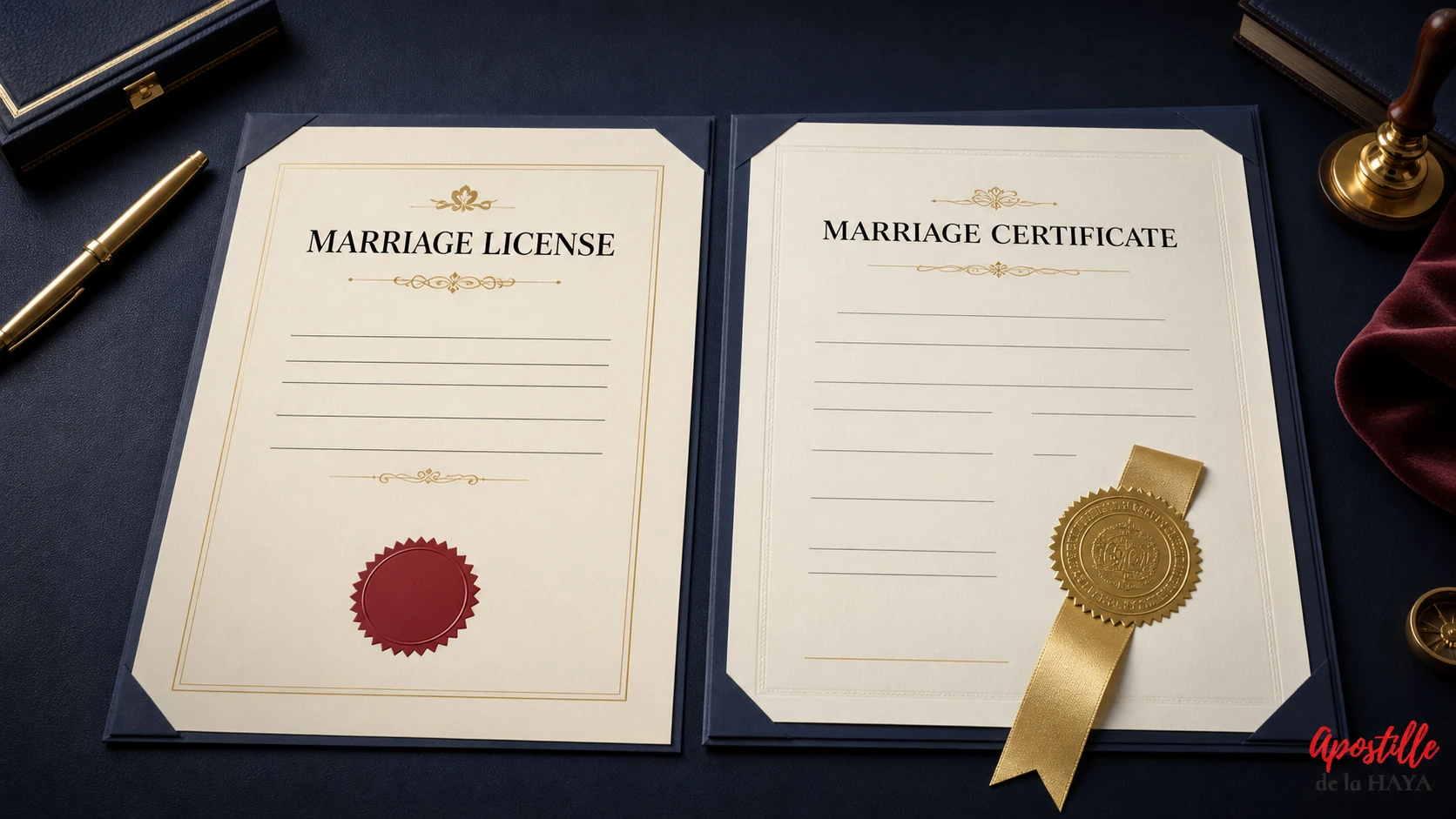
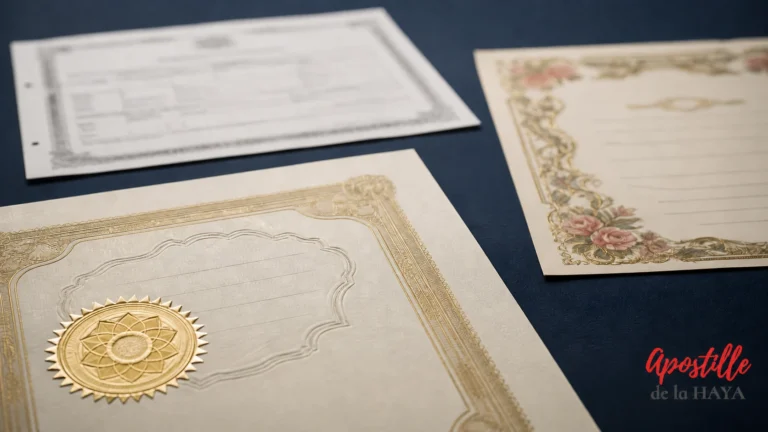
The decorated document signed by the officiant and the witnesses on the day of the wedding is not a public record. An apostille authority can only act on a signature it can verify in its own files, which means a public official signing in an official capacity. The keepsake is usually not that document, and it comes back unprocessed.
Vital records do not have an «original» you keep at home: the office holds the entry and issues certified copies of it. Florida states plainly that a photocopy is not acceptable. Sending a scan, a photograph or a home copy of a certified document costs the mailing time in both directions and changes nothing.
The federal Office of Authentications is not the competent authority for a state marriage record on the Hague route, so a request sent to Washington does not produce the state apostille the destination asked for. Jurisdiction follows the record: if you married in Florida and now live in Texas, Florida is still the issuing authority.
The five papers
One marriage, five documents — and only two of them reach an apostille desk
The question is never whether your document is «real». It is whether the copy in your hand was issued and certified by the office that holds the record — because that is the only signature an apostille authority can verify.
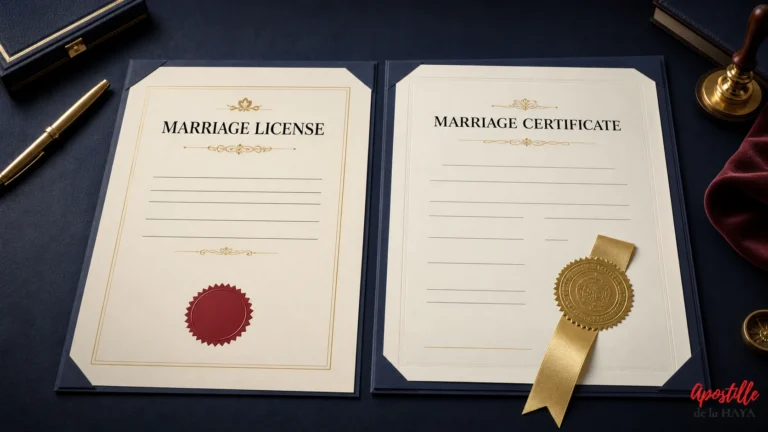
Authorisation issued before the ceremony, once both parties meet the state’s requirements. It says you may marry. On its own it does not prove that you did.
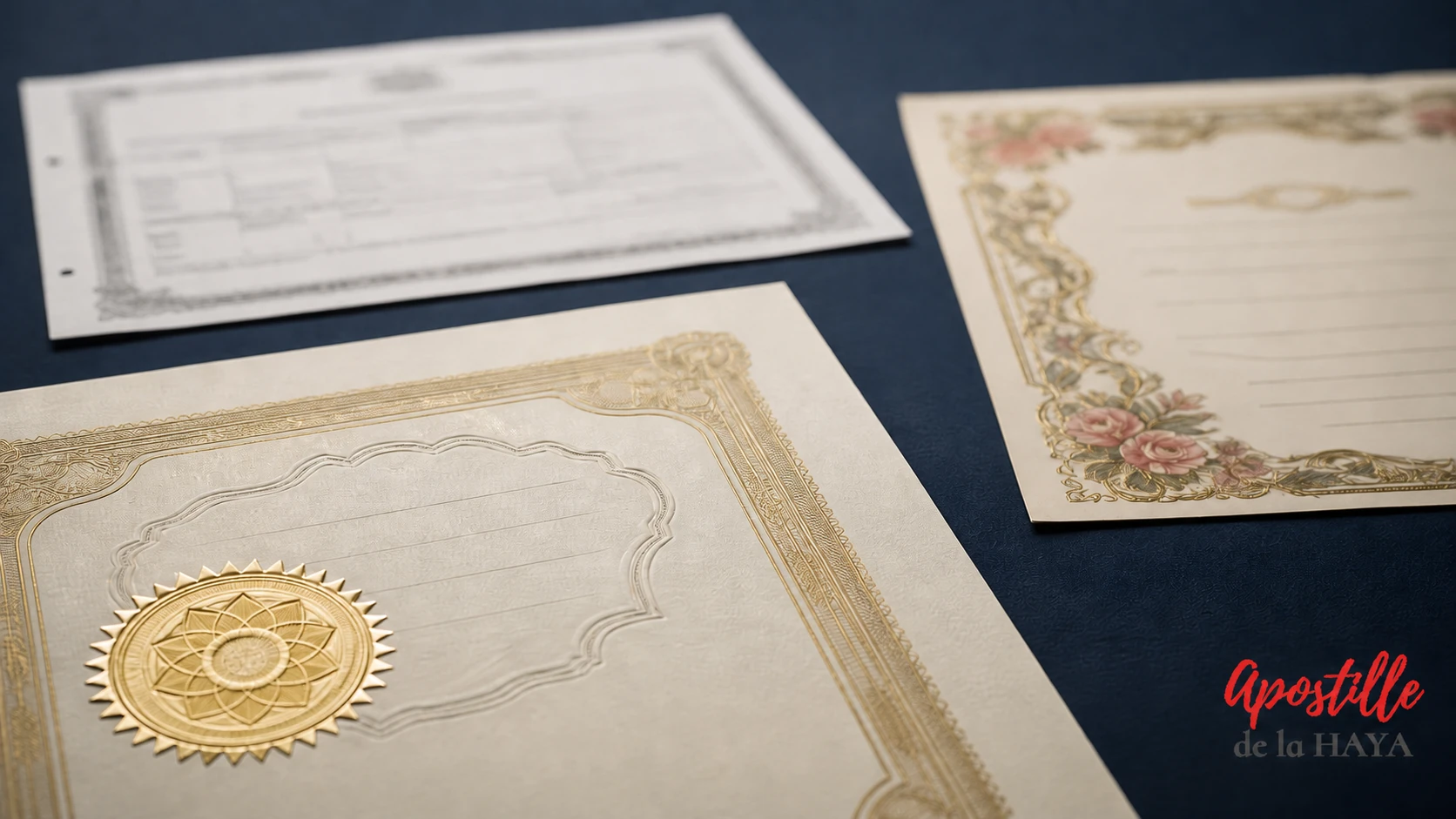
Handed to you on the day, signed by the officiant and the witnesses, sometimes sealed by a church. It is a memento, and it does not enter the apostille process.
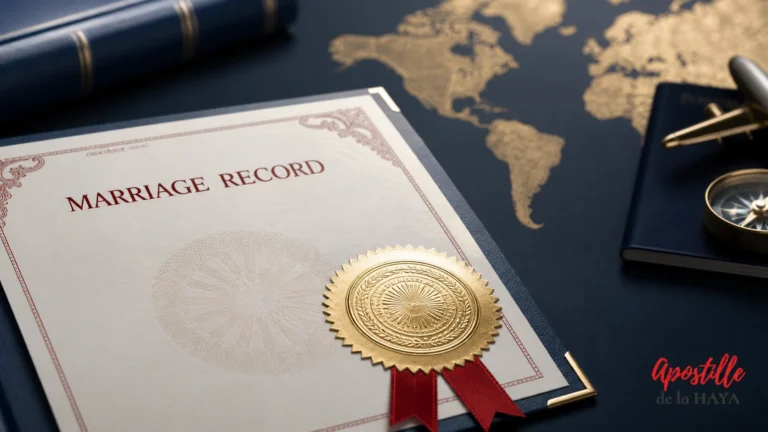
After the officiant returns the completed licence, the county records it and can issue certified copies of that entry. In Florida this route needs two certificates instead of one: the apostille plus a Certificate of Incumbency confirming the Clerk held office.
Where registration has reached state level, the vital records office issues its own certification. Same marriage, fewer stages — and in some states, such as New York, ordering this version removes a County Clerk step altogether.
Florida accepts two versions of the same marriage: a certified copy from the Clerk of the Circuit Court that recorded it, and a Certification of Marriage from the state Bureau of Vital Statistics. Both are valid. They do not cost the same, and they do not take the same time — the state adds a Certificate of Incumbency to the county version, because that signature belongs to a county officer.
Obtaining the certified copy, the state apostille, the shipping and the destination’s own step each run on their own timetable — and the first one is invisible in every table of apostille turnaround times.
Where it is going
The destination decides the instrument, the format and the deadline
The apostille is only the first half. Under Article 161 of Mexico’s Código Civil Federal, a marriage celebrated abroad by Mexicans is to be transcribed in the Registro Civil within three months of the spouses’ arrival in the Republic: transcribed inside that window, the civil effects relate back to the wedding date; later, they run only from the transcription. It does not invalidate the marriage — it moves the date from which it counts.
Three authorities instead of one, and the last of them writes its own rules. That road is handled in our Legalization & Embassy section.
Not this section
Getting the certified copy in the first place is a different question
Which office holds a marriage record, how the index is searched and who is allowed to be issued a certified copy belong to Marriage Records & Licenses. This section starts one step later: you have a copy, and the question is whether it can be apostilled. The two meet in our guide to which copy qualifies.
The file
Four figures this section actually states
1961
the convention
The apostille was created by the Hague Convention of 5 October 1961, which abolished the requirement of legalisation for foreign public documents.
5
papers, one marriage
Licence application, licence, the ceremonial certificate — which is not a public record and never reaches an apostille desk — the clerk’s recorded certified copy and the state registrar’s certification.
4
clocks in the file
The certified copy, the state apostille, the shipping and the destination’s own step. Each starts only when the previous one ends.
3
months, in Mexico
Article 161 of the Código Civil Federal: transcribed in the Registro Civil inside that window, the civil effects relate back to the wedding date.
Apostille de la Haya
The right copy, from the right office, on the right route
We start from the authority that will receive the document, because that is what decides which version of your record you need, whether a translation is required and in what form, and whether an apostille is even the correct instrument for that destination. Then we order it, route it and track it.