FATF and the U.S.: How International AML Standards Reach American Companies
Learn how FATF standards influence U.S. legislation, supervision, risk decisions and commercial due diligence without becoming U.S. law by themselves.
Parte de la red Riveros Corp: Apostille de la Haya·Notary Public Center·Compliance Officers·USJurisdiction
Part of the Riveros Corp network: Apostille de la Haya·Notary Public Center·Compliance Officers·USJurisdiction
Home » Background Checks & Compliance » Anti-Money Laundering
How to request your own FBI report and your own U.S. government file, what the nine FOIA exemptions can withhold, and who still has to file a beneficial ownership report — 23 guides on getting records out of federal agencies.
Every article in this section, listed on this page.
FOIA, the FBI report, FinCEN, and online identity fraud.
These records come from Washington. The state route does not apply.
Most of this section is about requesting records the government holds about you.
Four groups: the file the government holds on you, the FBI report, the filings your company may owe, and the fraud everyone asks about.
All 23 titles are listed further down, grouped the same way.
A file the government holds about you, a criminal-record report you can hand to someone abroad, and a filing you may or may not still owe.
An agency can withhold nine categories of information, and only nine. Knowing which one they cited tells you whether the refusal is worth appealing.
1,106 impressions · 2 clicks · pos. 24.6
Background check, rap sheet, clearance certificate, police certificate — all the same federal report, requested the same way.
26 impressions · pos. 13.2
Beneficial ownership reporting changed and most domestic companies came out of scope. Whether yours did is the first thing to check.
21 impressions · pos. 24.5
The Freedom of Information Act obliges federal agencies to release records on request, but lets them withhold information falling into nine categories: (1) classified national defence and foreign policy material; (2) internal agency personnel rules and practices; (3) information another statute specifically exempts; (4) trade secrets and confidential commercial or financial information; (5) privileged inter- and intra-agency communications; (6) personnel, medical and similar files whose release would clearly invade personal privacy; (7) law-enforcement records, where release would cause one of six specified harms; (8) records on the supervision of financial institutions; and (9) geological and geophysical data on wells.
The exemptions are permissive, not mandatory — an agency may release exempt material if it chooses. They also apply to information, not to whole documents: if only part of a record is exempt, the rest must be released with the exempt portion redacted. When a refusal arrives, the exemption number it cites is the whole argument, and it is what an administrative appeal has to answer.
impressions in 90 days across the eight FOIA guides — 56 % of this section.
…on the single query «what are the 9 exemptions to a foia request», at position 13.5.
the two cited most often when someone requests their own file — privacy and law enforcement.
Consulates, foreign employers and immigration lawyers all ask for it differently, and people assume they are being asked for five different things. They are not.
Identity History Summary
The FBI, Criminal Justice Information Services division.
Submit fingerprints; the FBI returns a PDF — with or without a criminal record on it.
Identity History Summary
The FBI, CJIS.
Nothing different. It is the same document under an informal name.
Identity History Summary
The FBI, CJIS.
This is what consulates and foreign employers mean, including when they say «good conduct certificate».
Identity History Summary — or a state record
The FBI, or a state police agency.
Ask which one they want. Federal and state checks cover different databases and are not interchangeable.
Identity History Summary, delivered by an FBI-approved channeler
A private company the FBI has approved to submit on your behalf.
Same report, obtained faster. Confirm the receiving office accepts a channeler copy.
There is no such thing
—
Fingerprints are the input, not the output. The apostille goes on the report the FBI produces from them.
One document, five names, one route. And because the FBI is a federal agency, the apostille for it is issued by the U.S. Department of State in Washington — never by a state Secretary of State, wherever you live or were fingerprinted.
Four routes, ordered by measured demand over 90 days. Two of them — FOIA and online fraud — are why most people find this section at all.
How to request records a federal agency holds about you, what it may withhold, and what to do when the answer is no.
1,246 impressions / 90 d · 3 clicks
One federal document, five names and one route — including the apostille that makes it usable outside the United States.
339 impressions / 90 d
Beneficial ownership reporting after the 2025 change, and the due diligence a company runs on the people it deals with.
36 impressions / 90 d
Where the word «catfishing» comes from, how the scam is run, and what verification would have caught it.
616 impressions / 90 d · 3 clicks
No pagination roulette: the 23 titles are all here, A–Z, and the search box filters them live. Today this URL shows 11.
The 23 guides in reverse chronological order, with the full paginator. This block feeds itself: every new post in AML Compliance appears here without anyone editing the page.

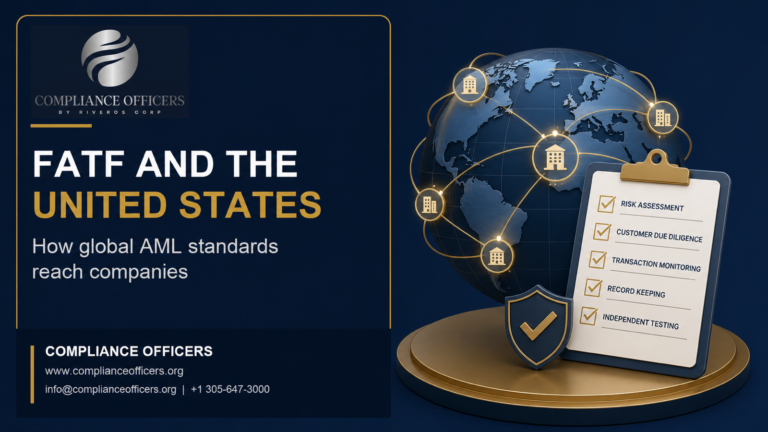
Learn how FATF standards influence U.S. legislation, supervision, risk decisions and commercial due diligence without becoming U.S. law by themselves.

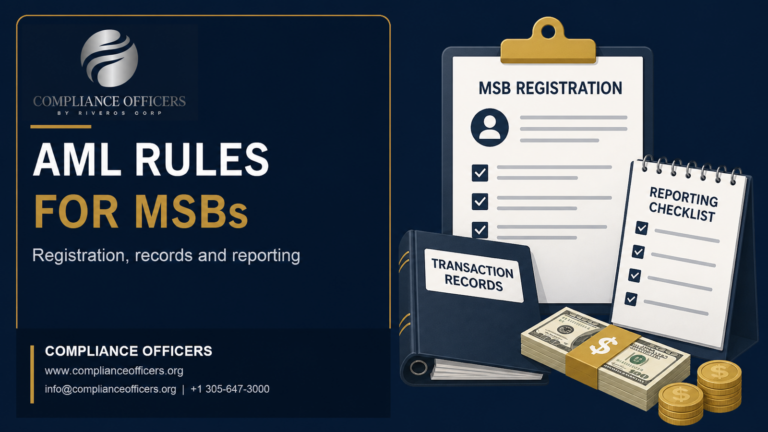
Understand federal AML rules for MSBs, including activity classification, FinCEN registration, agent lists, program duties, reporting and records.

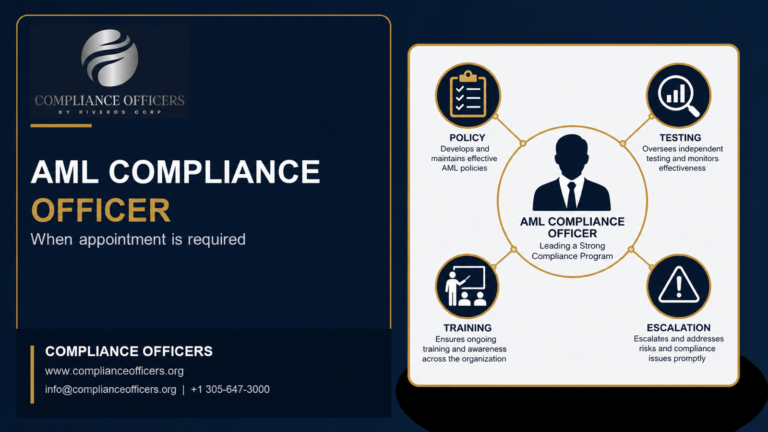
Learn when a covered institution must designate an AML compliance officer and what authority, access, independence and documentation the role needs.

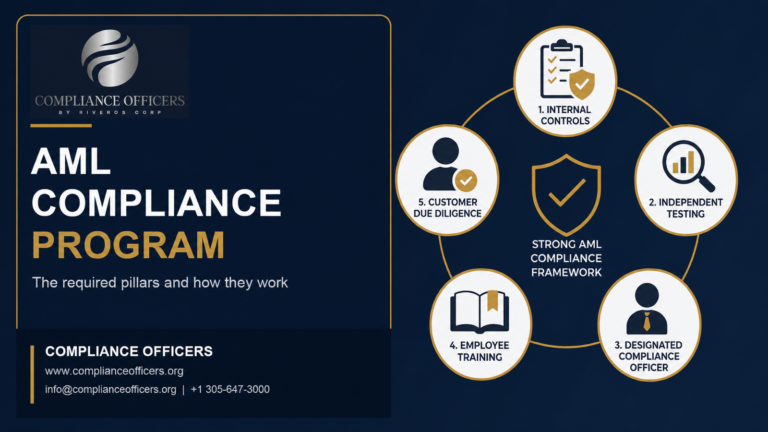
Understand the core elements of an AML compliance program, how rules differ by institution and why risk assessment must connect controls to exposure.

Review 20 money-laundering warning signals and learn how context, escalation and documented decisions turn alerts into a controlled process.

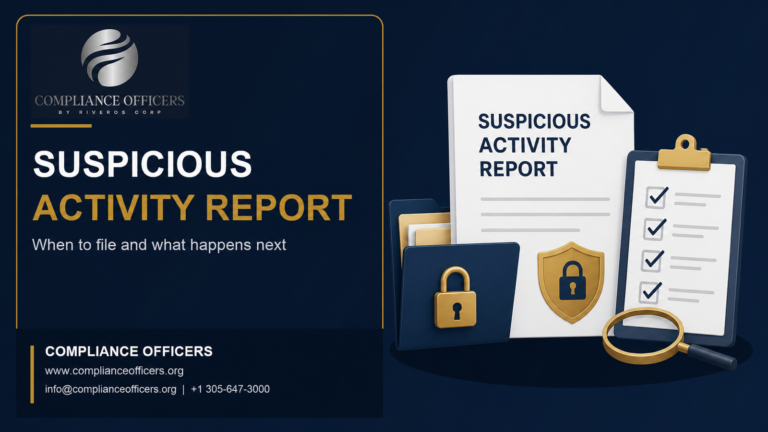
Understand SAR triggers, the general 30-day filing rule, the limited no-suspect extension, confidentiality and supporting-record duties.

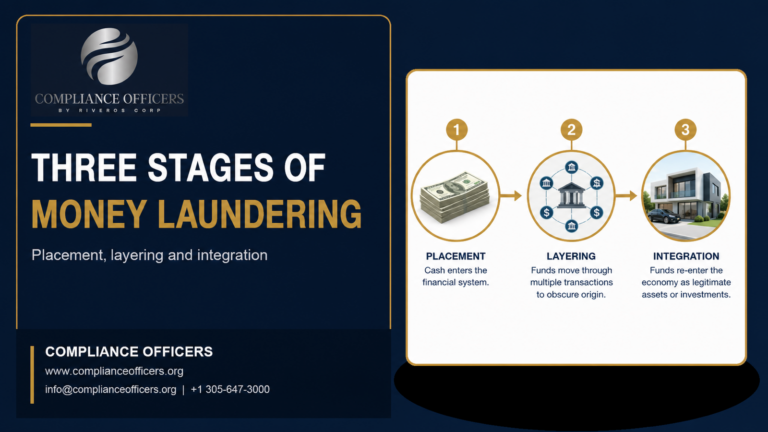
Understand placement, layering and integration as an overlapping risk model and match each exposure to appropriate business controls.

Learn how the Bank Secrecy Act reaches covered non-bank sectors and how program, reporting, recordkeeping and registration duties differ.

Apply a current 2026 activity-based test to determine whether a U.S. business needs an AML program and document the conclusion responsibly.

Understand who is subject to U.S. anti-money laundering duties, which current rules apply and where prudent due diligence goes beyond a direct BSA obligation.
Verbatim from Search Console, with the answers in the first line so they can be quoted by Google and by AI assistants.
Classified defence and foreign policy material; internal agency personnel rules; information another statute exempts; trade secrets and confidential commercial data; privileged agency communications; files whose release would clearly invade personal privacy; law-enforcement records causing one of six specified harms; records on supervising financial institutions; and geological data on wells. They cover information, not whole documents — the rest of a record must still be released, redacted.
It can be denied in part or in full, but only by citing one of the nine exemptions — and the agency has to say which. That citation is what an administrative appeal argues against. «No records found» is a different answer from a denial, and is itself appealable.
Almost nobody: any person, of any nationality, anywhere, can file one, as can companies and organisations. The Act binds federal executive-branch agencies only — not Congress, not the federal courts, and not state or local government, which have their own public-records laws.
Yes. Both are informal names for the FBI’s Identity History Summary, the list of arrests, charges and dispositions the FBI holds under your fingerprints. «FBI clearance certificate» and «U.S. police certificate» usually mean the same document too.
From a 2010 documentary in which a fisherman’s anecdote — cod shipped with catfish in the tank arrive livelier — became a metaphor for people who keep others on their toes by pretending to be someone else online. The term stuck when the film became a TV series.
For many companies the answer changed during 2025, when the reporting obligation was narrowed. Whether yours still files depends on where it was formed and on the exemptions it meets, so the honest answer is to check the current rule against your own entity rather than rely on guidance written before the change.
Compliance Officers files the FOIA request, obtains the FBI Identity History Summary through an approved channeler, prepares the BOI submission and takes the report through the federal apostille when it has to be used abroad. Same team that writes these guides.