US degree attestation for UAE use is easier to coordinate when the academic file has a clear starting point and a clear recipient. Before you arrange any certification, establish which U.S. institution awarded the degree, which records you have and what the UAE employer, university or authority requires. A diploma that is good enough for a preliminary review may still need official preparation before it can go through the requested route.
This guide follows the file from the U.S. institution to the UAE recipient. It separates school records, American authentication, the current Washington and VFS channel and any remaining requirement in the UAE. Apostille de la Haya can review the preparation your actual documents need. Academic recognition and professional eligibility stay with the authorities that decide them. The document legalization service explains the wider certification assistance; the destination and document category still need their own review.
US degree attestation for UAE starts with a clear inventory
Identify the final degree certificate, the transcript and any statement from the institution that the recipient has asked for. Note the awarding institution, the campus, the qualification title, the award date and the name shown on each record. Say whether the diploma is final or provisional and whether the transcript shows the award. That way, an incomplete academic file isn’t treated as ready just because a certificate exists.
Find out where the original documents are. A graduate living in the UAE may have left the diploma with family in the United States, while official transcripts can only be issued by the registrar. Those different locations affect coordination and delivery. Work out who is responsible for each item, and don’t assume one person or office can supply or certify the whole file.
Keep unofficial reference copies apart from the official records you will submit. A screenshot from the student portal can help explain your course history, but it may not meet the recipient’s requirement for an official transcript. An electronic diploma may come with its own verification features. Settle the acceptable format for each record before you print, notarize or ship it.
Confirm what the recipient requires before ordering any work
Ask the UAE organization that makes the decision for a written list of documents. A recruiter’s message may use “degree attestation UAE” loosely when the employer actually needs several different deliverables. Find out whether it wants an attested diploma, an official transcript, direct verification from the university, a recognition report or evidence of professional licensing.
Work out which stage of the wider application you are at. Preliminary screening may accept a scan, while final onboarding or registration may require the completed official packet. Ask which deadline applies to each stage. Knowing this helps you prioritize the missing academic records, and it keeps an early upload deadline from being confused with the date when all certifications must be done.
If the instruction is ambiguous, clear it up before you certify every academic paper you own. A bachelor’s diploma, a postgraduate diploma, a professional certificate and a transcript are not interchangeable. The recipient should say which qualification supports the intended purpose. Attesting extra documents that nobody asked for can add handling and delay without answering the real question.
Verify the institution and the accreditation evidence
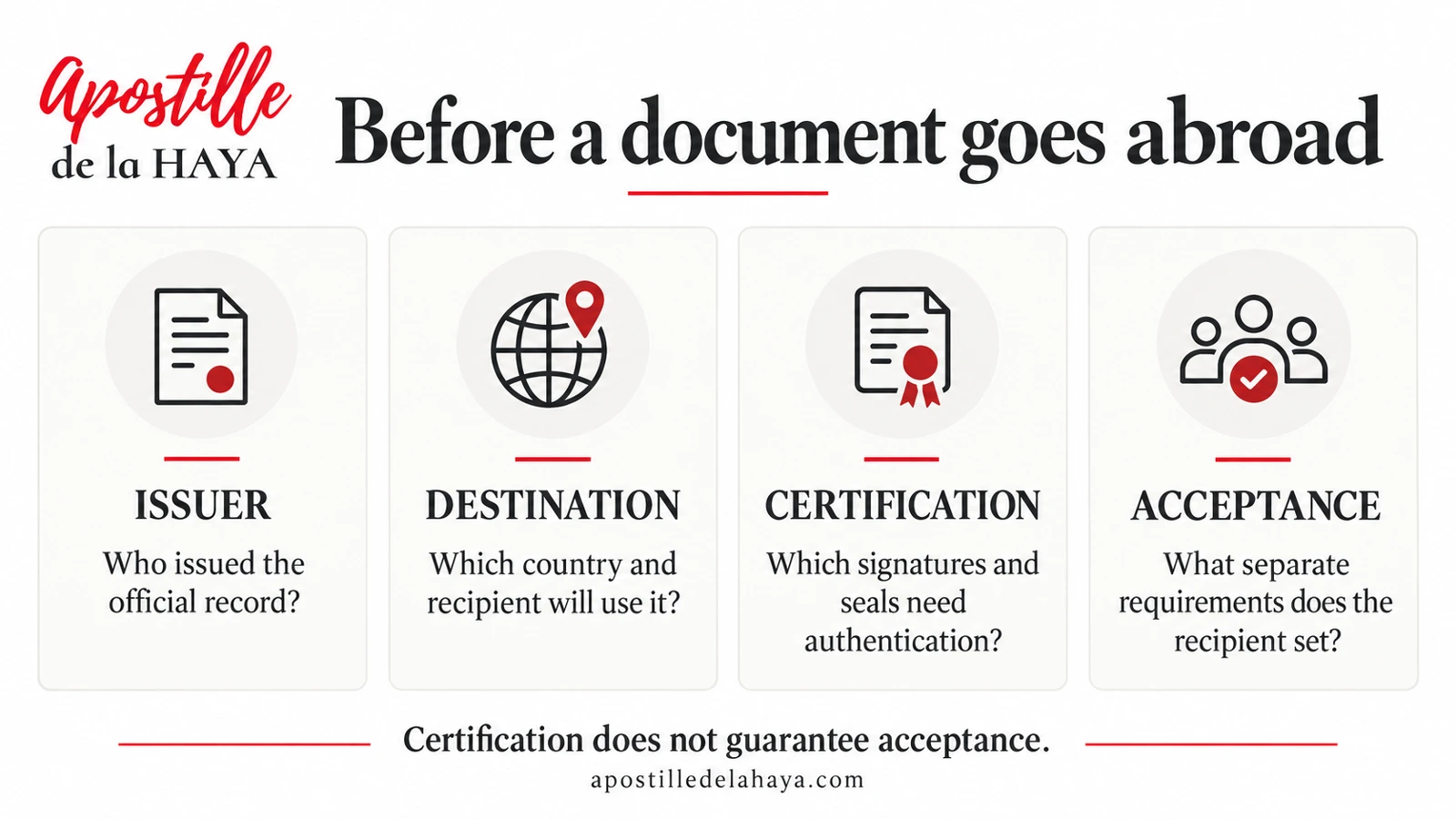
The UAE embassy’s guidance on educational documents makes the U.S. institution and its accreditation relevant to preparation. Match the exact awarding body. A school’s short name or an affiliated teaching center is not a reliable match. A connection to the United States doesn’t, on its own, show that the document fits the Washington educational route.
Use the CHEA search of accredited institutions to find the right institutional information, and raise any discrepancy with the school or the accreditor. Institutional accreditation and a professional program’s own accreditation are different things. The evidence should match the institution and qualification actually shown on the documents.
If the award involves an overseas campus, a joint program or transferred credits, describe that accurately when the recipient or the recognition authority asks. A U.S. brand name doesn’t automatically settle where the degree was issued or whether it is academically eligible. Have the competent channel confirm how your actual award should be handled before you commit the original to a certification route.
Get registrar-issued records that fit the purpose
Contact the institution’s authorized records office and share the recipient’s requirements. Ask which official diploma copy, transcript or verification statement it can issue for international use. Find out whether a particular signature or school statement has to be prepared in a specific way for the later certification. Asking for “a stamp” without explaining the route can get you the wrong document.
Check whether the school must send any record directly. Direct verification serves a different purpose from a diploma that travels through government authentication offices. If the recipient asks for both, plan them as separate deliveries. Don’t open a sealed record or forward a file yourself when the recipient has asked for it to go straight from the institution.
Review names and dates before you order replacements. A legitimate change of surname may call for evidence linking the names, and the diploma may not need to be reissued. A genuine error by the institution should be corrected through the school’s own procedure. Translators and document handlers shouldn’t alter the academic record to hide a discrepancy or describe a qualification differently from the awarding institution.
Prepare the right U.S. certification stages
The route depends on the kind of academic document and on the official or notarial act being certified. A university document isn’t a federal original just because the school takes part in federal programs. Where it is required, identify the competent state authority and confirm its preparation rules for the actual signature and format.
Review the U.S. Department of State authentication requirements before the federal stage. A missing state certification or an unsuitable document form can stop the route. Federal authentication doesn’t evaluate the curriculum, and it doesn’t decide whether the graduate meets UAE professional standards.
For general background on these distinctions, see the U.S. Department of State certification guide. An apostille issued for an earlier destination may not complete the requirements for US degree attestation for UAE use. Have the existing packet reviewed before you remove attachments, order another certificate or send it to a mission based on an outdated checklist.
US degree attestation for UAE through the current Washington and VFS channel
Under the Washington embassy’s current educational guidance, documents are handled through VFS after Department of State authentication. Confirm the active intake requirements on the VFS U.S. UAE attestation portal. Review the document category, supporting evidence, application details and delivery requirements for the submission you are making now.
Don’t copy instructions from a UAE mission in another country. Its local authorities, intake provider, accepted documents process may differ from the American route. An old address saved from another graduate’s application may also no longer point to the right intake office for the current service.
The set you send should match the set that was reviewed. If the registrar issues a replacement after the file was assessed, check whether the new signature or format changes the preparation. Keep a complete copy of what you dispatch, and keep official attachments intact. A clear inventory helps settle questions about whether the diploma, the transcript or a supporting statement was actually included.
Confirm what is left after the UAE attestation service
Identify which certification acts the service you chose includes and what completed output you will get back. Read the MOFA attestation service information for the relevant origin and document type. The ministry’s outward route for UAE-issued digital records shouldn’t be applied to a U.S. degree without checking eligibility.
When the service is complete, compare the returned packet with the service scope and the recipient’s instructions. Find out whether any requirement at the destination is still open and who will handle final delivery. Don’t automatically order another MOFA-related act if the service you chose already includes that certification. A courier receipt or a vague status message doesn’t prove completion, either.
If you receive a digital result, keep the original electronic file and any verification information. Ask the recipient whether it needs the electronic file, a physical document or both. A screenshot or printed copy may lose the verification features of a digital original, so settle the format before the final handoff.
Keep recognition and professional approval on a separate track
The UAE Ministry of Higher Education and Scientific Research runs its own qualification recognition service. Find out whether your intended purpose requires it and which records the process needs. When both apply, track attestation of signatures and recognition of the qualification as separate deliverables.
A professional regulator may also require its own credential assessment or licensing process, and an employer may have additional verification standards. Certification is not a promise of a job, permission to practice or admission to further study. Each responsible institution decides whether its own criteria are met.
If an authority asks about how you studied, transfer credits, program length or earlier qualifications, give accurate information backed by the institution’s records. Don’t fill gaps in the evidence with an assumed description. Getting academic questions answered by the right authority is more useful than collecting extra stamps that don’t address them.
Coordinate timing, translation and final delivery
Build the schedule around what depends on what. The registrar may have to issue a record before state preparation can start. Federal authentication may have to come before the U.S. intake stage, and the translation may need to cover attachments added later. Map out those dependencies before you promise the recipient a date. Fast courier transport doesn’t remove the processing time of an issuing institution or a government office.
Confirm which language is accepted and whether the complete packet needs translating. Ask who may translate and whether the translator’s statement needs its own certification. Degree titles should be translated accurately. They shouldn’t be turned into a supposedly equivalent qualification unless the appropriate authority has assessed it. Keep the translation separate from the academic recognition decision.
Track school issuance, certification processing and delivery separately. When the completed file for your US degree attestation for UAE comes back, check the holder’s details, the qualification, the attachments and the recipient reference. If a document is returned for correction, keep the notice. Before resubmitting, find out whether the problem concerns academic evidence, origin certification, intake requirements or a separate rule of the final recipient.
Frequently Asked Questions
Can I start while my diploma is still being issued?
You can clarify the recipient’s requirements and identify the records you need. Just don’t assume an interim letter will be accepted instead of the final diploma. Ask what preliminary evidence is allowed and when the final award has to be supplied. Plan the certification around the document the relevant authority actually accepts.
Do the diploma and the transcript follow the same route?
Not necessarily. They may be separate documents with different signatures, formats or delivery requirements. A recipient may ask the school to send the transcript directly while the diploma goes through attestation. Identify the purpose and required handling of each item before you treat them as one packet for the same submission.
Can a family member send the original from the United States?
Handling by a family member may be possible under the applicable service rules, but confirm the permitted submission and authorization arrangements first. Identify who holds the original, who is applying and where the completed packet has to go. Assistance can’t replace an act you are required to do in person, and it can’t authorize declarations that another person must make.
Is academic recognition included with attestation?
Don’t assume it is. Recognition is a separate process run by the relevant education authority. Attestation concerns the certification of the document. Ask the recipient whether both are required, and ask any service provider to state its scope clearly. A completed attestation doesn’t, by itself, amount to a recognition decision.
What if the degree was already prepared for another country?
Send the entire existing packet for review. Its apostille, authentication, translation or mission certification may not match the UAE requirement. Keep all attachments in place while the right route is assessed. Earlier use in another country is useful history, but it doesn’t automatically mean the file is ready for the new recipient and purpose.
Ask for a review of the complete academic file
The UAE embassy attestation service can help assess the preparation your U.S. degree and related records need. Send the awarding institution, the qualification, the official documents, any existing certificates, where the originals are now and the recipient’s instructions. List any direct-verification or recognition requirement separately.
Contact Apostille de la Haya on WhatsApp +1 305 500 0185 to discuss the next stage. A complete review can show which records are ready, which need attention from the issuer and what documentary work is still pending before the file goes to the recipient for its own decision.