Degree attestation UAE requirements depend on the institution that issued the qualification and on what the degree will be used for. This article covers degrees awarded by U.S. institutions that will be presented in the UAE. Before arranging certification, identify the awarding institution, check its accreditation evidence and confirm which academic records the recipient needs.
The diploma may be only one part of the file. A transcript, a verification from the institution or a separate recognition process can answer questions that a stamp on the diploma leaves open. Apostille de la Haya can assess how to prepare a degree attestation UAE file for the verified route from the United States. The relevant education authority, professional regulator or employer sets its own substantive requirements. The document legalization service explains the wider certification assistance; the destination and document category still need their own review.
Degree attestation UAE begins with the awarding institution
Read the exact legal name of the institution on the diploma. Note the campus, the awarding body, the title of the qualification and the award date. The school where you attended classes and the institution that awarded the degree are not always the same. Joint programs, branch campuses and transferred credits can create differences that the file should explain accurately.
Confirm that the document really was issued through the relevant U.S. institution. An American-sounding name, English text or a U.S. mailing address doesn’t prove where it came from. If the award came from a foreign institution or an overseas branch, ask the attestation channel how that affects the route. Don’t assume the same American process applies.
Note whether you hold the original diploma, an officially issued replacement, a digital credential or only a scan. Each one raises different preparation questions. Hold off on ordering an extra notarization until you know which academic document is required and in what format. A private statement about a copy can’t supply missing evidence from the institution about the award itself.
Check accreditation evidence against the current requirement
The UAE embassy in Washington publishes requirements for educational documents that cover the U.S. institution and the accreditation evidence. Review those criteria for the actual awarding body before you arrange certification. What matters is whether the institution meets the applicable requirement. The word “accredited” on its website doesn’t settle that.
The CHEA institution search is a useful place to identify accredited institutions and the organizations that accredit them. Match the exact school and location, and be careful not to pick an institution with a similar name. If the result is unclear, ask the institution or the accreditor to clarify, and confirm what evidence the attestation channel will accept.
Institutional accreditation and program accreditation are different concepts, and a professional recipient may ask about both. The U.S. Department of Education also publishes official background on accreditation. Neither a database entry nor a notarial stamp is an automatic promise of UAE recognition or professional eligibility.
Which records a degree attestation UAE request really needs
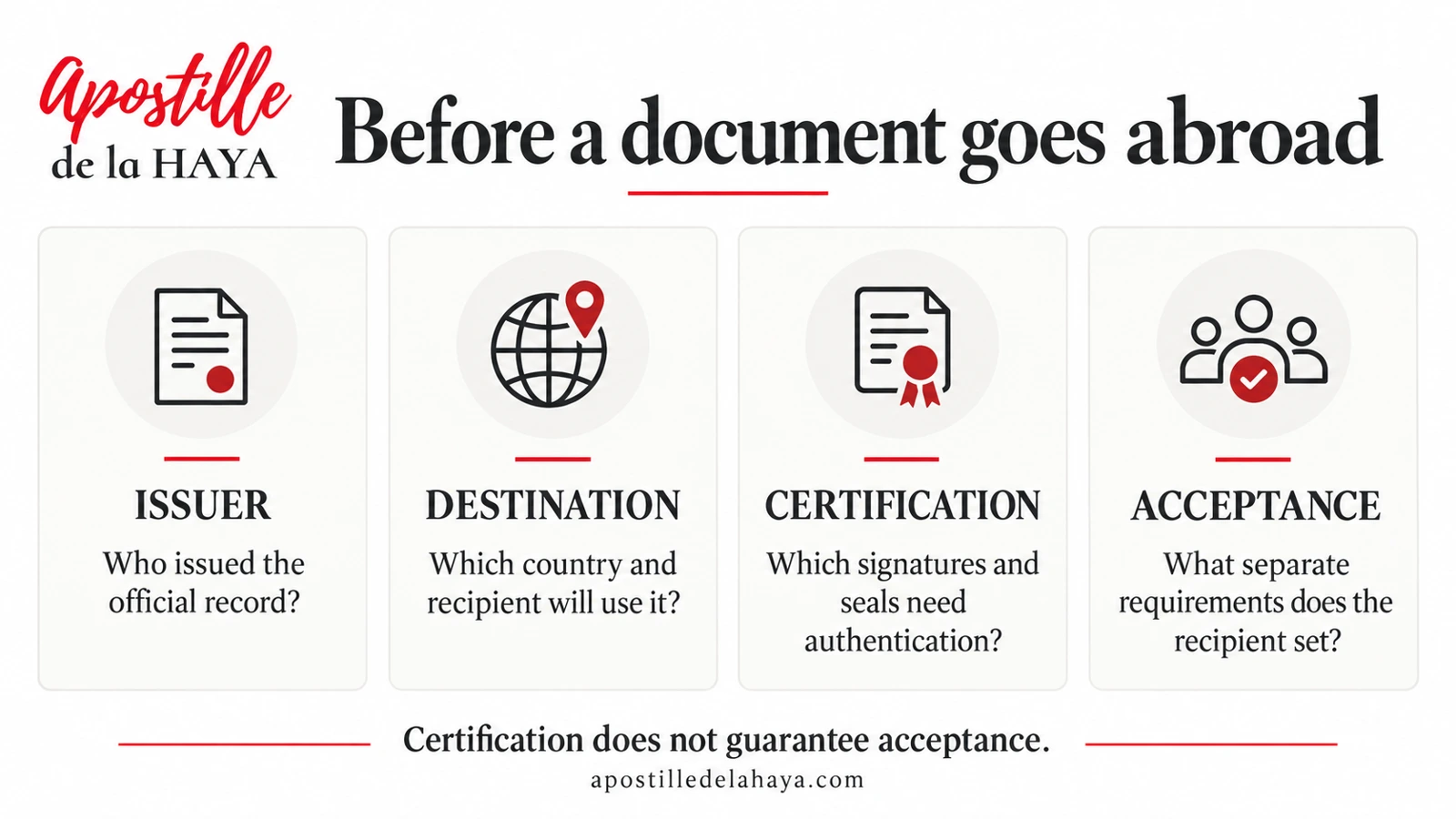
Ask the UAE recipient for a written list of the degree level and records it requires. Does it want the final diploma, the final transcript, a completion letter or verification sent directly by the school? Each of these answers a different question. A diploma records an award. A transcript usually gives academic detail that may matter for further study or recognition.
Check whether the available record shows the final award. A provisional letter or a transcript issued before graduation may not prove that the qualification was conferred. If the final diploma isn’t available yet, ask whether the recipient accepts interim evidence and what has to follow. Don’t present a pending qualification as completed just to meet a document deadline.
When a recipient asks for delivery directly from the institution, respect that requirement. Forwarding a file that was supposed to come from the registrar may not satisfy it. Ask the institution how it can issue and send the required records. Keep direct academic verification separate from the physical documents that have to go through a certification route.
Work with the registrar to get the right version
The registrar or the authorized records office can tell you which official transcripts, replacement diplomas and institutional verifications are available. Explain the intended international use and share the recipient’s requirements. Don’t ask for a generic “notarized degree” before you know which school statement or signature the later certification needs.
Check names and dates before the records are issued. A diploma may show a former surname or leave out part of the name on your current passport without being wrong. Ask what evidence the recipient needs to link the records to you. If the institution’s record really is incorrect, follow its correction procedure. Don’t alter the certificate, and don’t ask a translator to hide the discrepancy.
If the institution has closed, merged or changed its name, find out who is the lawful custodian of its records and get an explanation where needed. Don’t assume an unrelated school with a similar name can certify the award. An official records custodian may be able to provide the evidence you need, but the attestation and receiving authorities decide what they accept.
Degree attestation UAE: keep academic evidence apart from U.S. signature certification
Once you know which academic records are needed, assess how to prepare them for the right state and federal authorities. The relevant official or notarial act is what counts. A private university’s diploma doesn’t become a federal document because the school receives federal funding or appears in a federal accreditation database. The certification route has to be worked out from the actual record and signature.
The U.S. Department of State publishes the requirements for preparing documents for federal authentication. Where the applicable state requirements come first, meet them first. Authentication supports the relevant official signatures. It doesn’t evaluate course content, calculate equivalency or decide whether the degree qualifies the holder for a particular profession.
For academic documents on the Washington route, the embassy’s current guidance sends them to VFS after Department of State authentication. Confirm the active intake requirements through the VFS U.S. portal. An old mailing checklist or another graduate’s experience is no substitute for the current instructions for your document category and institution.
Treat UAE qualification recognition as a separate decision
The UAE Ministry of Higher Education and Scientific Research runs a qualification recognition process. According to its current service description, verification goes through authorized partners and is followed by the ministry’s recognition application. That process is separate from certifying the signatures on documents through an attestation route.
Ask whether your intended purpose requires recognition and which qualification has to be assessed. An employer’s preliminary request for documents may differ from a university’s admission requirement or the standards of a regulated profession. A recognition report for one qualification doesn’t necessarily answer every question about earlier degrees, specialist training or professional practice.
If your studies involved distance learning, transferred credits or a branch campus, describe them accurately when asked. Avoid broad assumptions that every qualification of that kind is accepted, or that it is rejected. The competent authority should assess the actual program against its current criteria. A document-handling service can’t make an ineligible academic history eligible by adding more stamps.
Find out what the employer or regulator needs
Get the requirement from the institution that makes the decision, and don’t rely only on an intermediary’s summary. If a recruiter asks for “attestation,” find out whether the employer also needs a recognition report, professional registration or direct verification from the school. These are separate deliverables, and they may involve different parties, different information and different processing times.
For a regulated profession, identify the responsible regulator and its current credential requirements. Attestation doesn’t give anyone permission to practice medicine, engineering, law or any other regulated occupation. A general article about degrees is not a basis for a professional eligibility decision. Your document file should support the authority’s process without claiming that certification decides the outcome.
For further study, ask whether the institution needs transcripts, grading explanations, course descriptions or records sent directly. Submit only what is requested, and keep official records apart from explanatory material you prepared yourself. A well-organized academic file makes that difference visible, so not every page looks as if it carries the same weight as evidence.
Plan translation and document handling together
Confirm which language is accepted and whether the recipient needs a translation of the diploma, the transcript and the attached certifications. Find out who may translate and whether the translator’s declaration needs its own certification. A translated degree title should reflect the source award faithfully. It shouldn’t upgrade it to a different qualification that sounds more familiar at the destination.
Keep official attachments intact and keep a complete copy of the set you submit. If an electronic credential is accepted, keep its original file and its verification mechanism, because a screenshot may leave out information needed to validate the record. On the other hand, having a digital diploma doesn’t mean every authority will accept it instead of a paper document.
Keep a log of each item: its issuer, format, certifications, destination and delivery requirement. Track the institution’s issuance, the government processing and the courier delivery separately. A registrar’s dispatch confirmation doesn’t prove federal authentication is done. A completed attestation doesn’t prove the employer has accepted the qualification. Each of these stages needs its own follow-up.
Frequently Asked Questions
Does an accredited U.S. degree automatically qualify for use in the UAE?
You can’t draw that conclusion automatically. The institution’s accreditation is relevant, but the attestation criteria, the recipient’s requirements, the recognition process and professional rules may each ask different questions. Review the actual awarding institution and the intended use. A database listing provides accreditation evidence; the competent UAE authorities still decide recognition and professional eligibility.
Do I have to include a transcript with the diploma?
Confirm the current requirement with the recipient and the attestation channel. A transcript may be needed for academic review or verification, but don’t treat it as a universal requirement for every service without checking. If the institution has to deliver it directly, follow that instruction and don’t forward an unofficial student copy.
Can a notarized diploma replace verification by the university?
Not necessarily. A notarial act concerns the relevant signature or statement. It doesn’t automatically confirm the academic award through the institution’s records. If the recipient or the recognition authority requires direct verification, that is still a separate requirement. Find out which school-issued statement and which certification are needed before you arrange any notarial work.
What if my diploma shows my previous name?
Ask the recipient what evidence it accepts to link the diploma to your current identity. A legitimate name change doesn’t necessarily mean the academic record has to be altered. If the school made a genuine error, use its correction process. The translation should represent the source document accurately and must not conceal the difference.
Does attestation guarantee a job or a professional license?
No. Employers and regulators make their own decisions and may require recognition, registration, experience or other evidence. Attestation supports the certification status of the document. It shouldn’t be sold as a guarantee of a job, a license, or eligibility for a particular visa category or professional position.
Get your academic documents reviewed before you submit them
The UAE embassy attestation service can help assess the preparation your U.S. qualification needs. Send the awarding institution, the qualification, the complete records, the accreditation evidence, any existing certifications and the recipient’s written requirements. Say whether the diploma has been issued and whether anyone has asked for direct transcript delivery or for recognition.
Contact Apostille de la Haya on WhatsApp +1 305 500 0185 to discuss the file. The U.S. Department of State certification guide gives broader background on the American stage. A focused review of a degree attestation UAE file should identify the next documentary requirement and leave academic acceptance and professional eligibility to the authorities that decide them.