
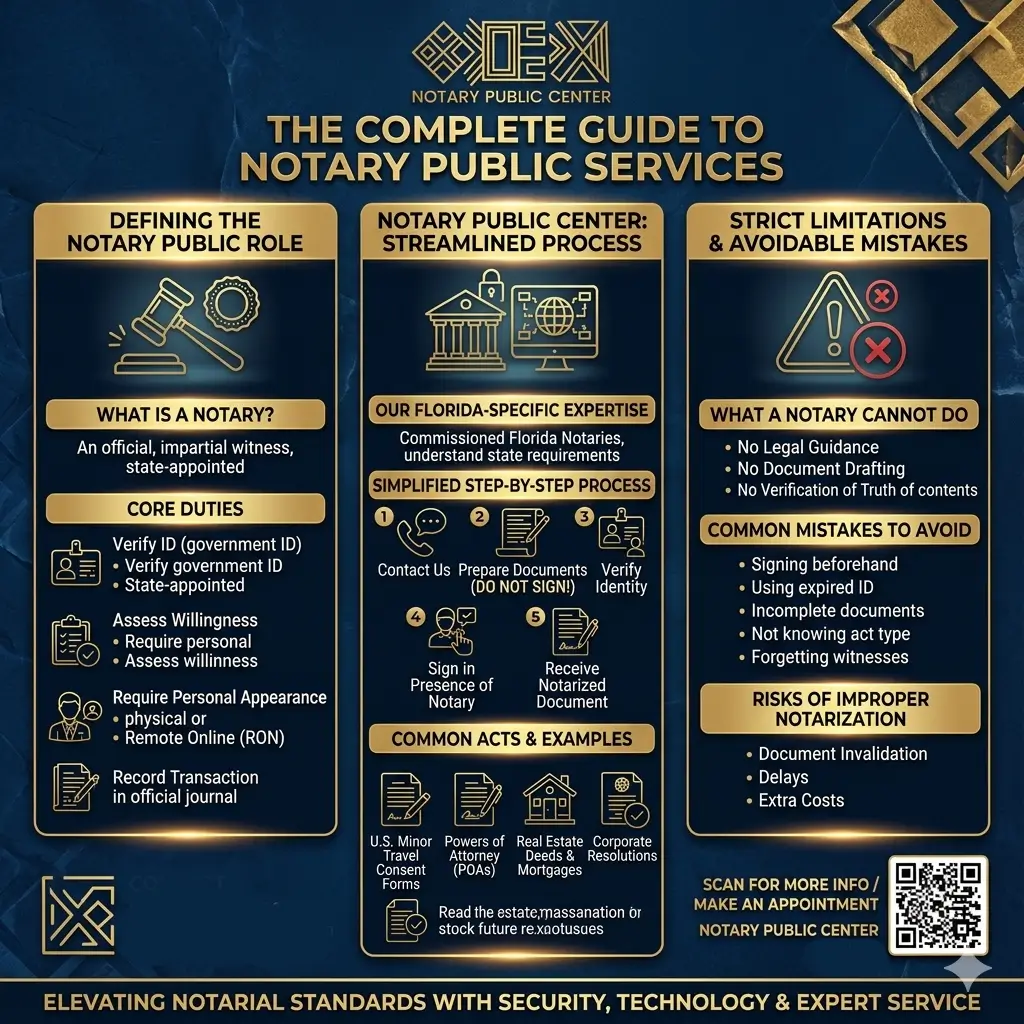
What does a notary do? A notary public performs an impartial identity and signature-control function authorized by state law. The notary checks the signer, confirms personal appearance, completes the requested notarial act and fills out the certificate. These steps help deter fraud. However, notarization does not prove that every statement in the document is true. It also does not guarantee that a court, bank or foreign authority will accept the document.
The right process depends on the document and the receiving party. Some documents need an acknowledgment. Others need an oath or affirmation. A document may also need witnesses, a specific certificate or later authentication for use abroad. Notary Public Center offers eligible Florida notarizations in person and through Remote Online Notarization. We first review the procedural details so the signer can choose an available route before signing.
What a Notary Public Actually Verifies
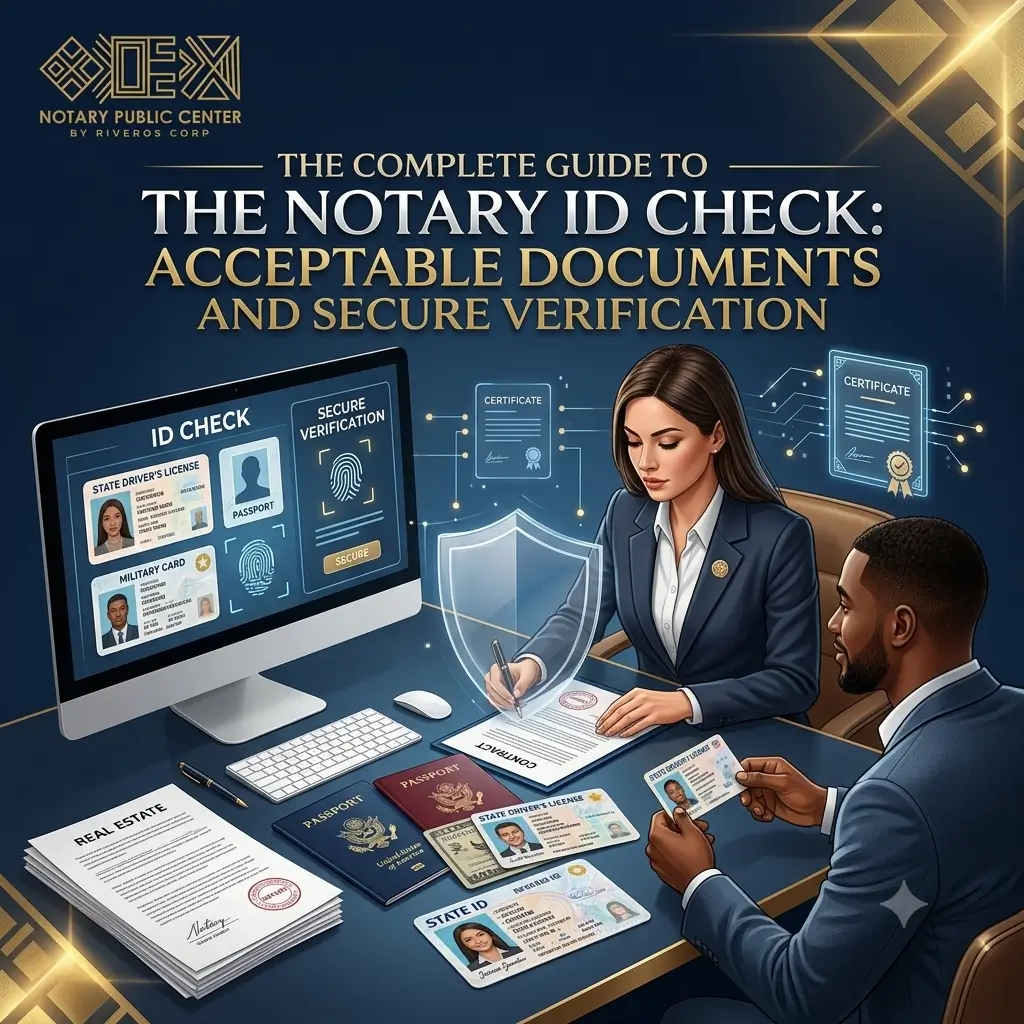
A notary verifies the identity of the person whose signature will be notarized. Florida law permits personal knowledge or satisfactory evidence of identity. The notarial certificate must state which method supported the identification.
The signer must appear before the notary. Appearance may be physical or may occur through authorized audio-video technology for an eligible online notarization. The notary also looks for signs that the signer is acting willingly. If the circumstances suggest coercion, impersonation or inability to communicate, the notary may stop the appointment.
Next, the notary performs the act selected by the signer, document issuer, receiving institution or licensed attorney. Finally, the notary completes the certificate. A Florida certificate identifies the venue, date, signer, act, identification method, notary signature and official seal.
What Notarization Does Not Prove
Notarization focuses on the notarial act and the signature. It does not confirm that the contract is fair. It does not determine whether the document is legally effective. It also does not verify every factual statement in the document.
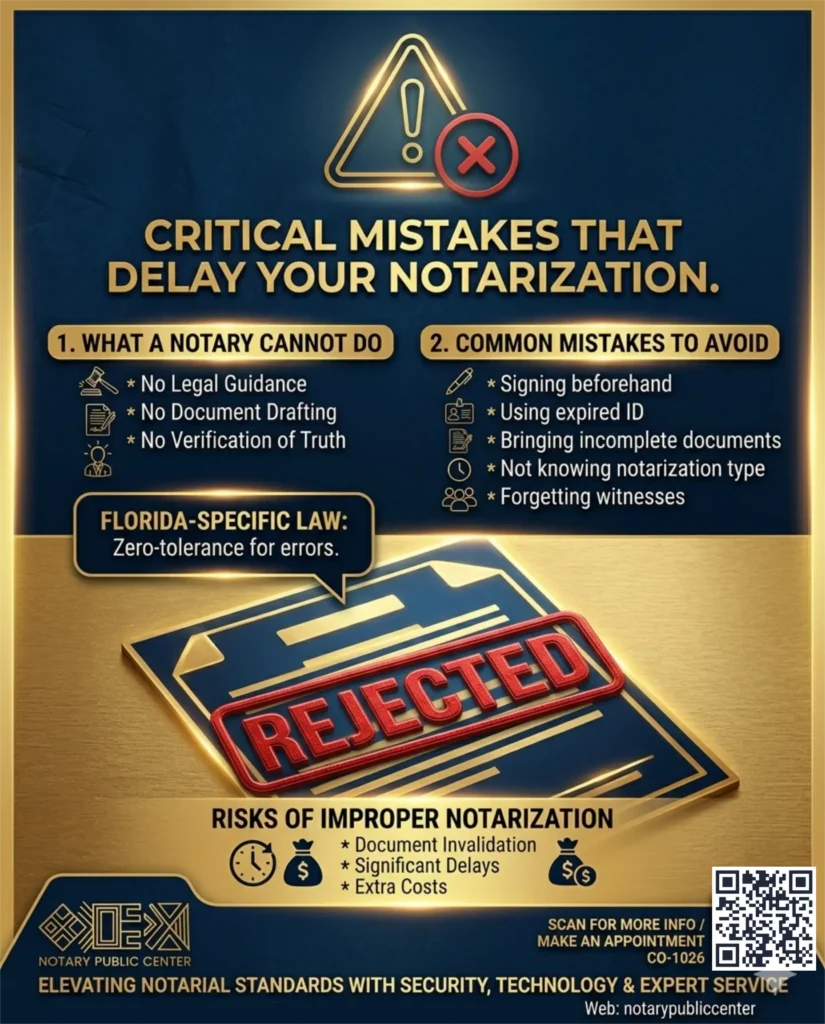
A notary who is not acting as a licensed attorney cannot give individualized legal advice. The notary cannot choose a certificate for a signer when that choice requires legal judgment. The signer should obtain instructions from the document issuer, receiving party or an attorney.
This distinction matters because people sometimes expect the seal to validate the entire transaction. The seal instead shows that a commissioned notary completed a specific act on a specific date. The receiving authority still applies its own rules.
Acknowledgment and Jurat: Two Common Notarial Acts
Acknowledgment
In an acknowledgment, the signer declares that the signature is voluntary and was made for the purposes stated in the document. Depending on the applicable rules, the document may have been signed before the appointment. The signer must still appear and acknowledge the signature to the notary.
Jurat or oath
For a jurat, the signer swears or affirms that the statement is true. The signer normally signs in the notary’s presence. Affidavits and other sworn statements often use this act.
The wording matters. An acknowledgment does not replace an oath. A jurat does not replace an acknowledgment. Therefore, confirm the requested act before the appointment. A notary can explain the procedural difference but should not make the legal choice for the signer.
When You May Need a Notary
A document may need notarization because a statute, contract, government office, court, lender or receiving institution requires it. Common examples include certain powers of attorney, affidavits, consent forms, real-estate instruments and business records. Still, the requirement depends on the specific document and destination.
Do not assume that every important signature needs a notary. Also, do not assume that notarization alone makes a document enforceable. Ask the receiving party what certificate, witnesses and document format it requires.
For related planning, review our guides to notarized affidavits and online notary services.
In-Person and Remote Online Notarization in Florida
An in-person appointment places the signer and notary in the same physical
location. This option may be appropriate when the receiving party wants a paper
original, wet-ink signature or physical witnesses. Bring the complete document and
acceptable identification. Avoid filling in the notarial certificate yourself unless
you received clear instructions.
Florida also authorizes online notarization. The online notary must follow the
state’s remote procedures and use live two-way audio-video communication. The
principal may be outside Florida. However, the Florida online notary must be
physically located in Florida during the act.
When the signer is not personally known, the online process may require remote
presentation of a government credential, credential analysis and identity proofing.
The session is recorded as required by Florida law. If the identity checks cannot be
completed, the online notary cannot proceed through that method.
Online availability does not guarantee recipient acceptance. Some transactions,
documents or foreign authorities may require a paper original or another procedure.
Confirm acceptance before choosing Remote Online Notarization.
Identification, Willingness and Document Condition
Identification rules depend on state law and the notarization method. A current
government-issued credential is commonly used. Florida law also recognizes personal
knowledge and limited credible-witness procedures in qualifying situations.
The notary must connect the person appearing with the person named in the
document. The notary also evaluates the surrounding circumstances. A notary should
not continue when the signer appears coerced, cannot communicate willingness or does
not understand that a signature is being made.
The document must be complete enough for notarization. Florida prohibits a notary
from notarizing a signature on a blank or incomplete document. Therefore, attach all
pages and complete non-signature fields before the appointment. Leave the signature
unsigned when the requested act requires signing in the notary’s presence.
Witnesses Are Separate From the Notary
A witness observes execution in the capacity required by the document or law. A
notary performs a notarial act. Those roles can overlap only when the applicable rules
allow it. The document may require witnesses even when it also requires notarization.
Confirm the number and qualifications of witnesses in advance. Ask whether the
witnesses must be disinterested. Also ask whether remote witnessing is accepted for
the transaction. The notary should not invent missing witness requirements at the
appointment.
How to Prepare Before the Appointment
- Confirm the requested act. Ask whether the document needs an
acknowledgment, jurat or another authorized act. - Check the document format. Determine whether the recipient
accepts an electronic record or requires paper. - Prepare identification. Send credential details in advance if
you are uncertain about eligibility. - Arrange witnesses. Confirm whether witnesses are required and
who may serve. - Keep the document complete. Attach every page and avoid blank
material fields. - Wait to sign when necessary. A jurat generally requires signing
in the notary’s presence.
Why a Notary May Decline the Appointment
A notary does not have to complete every requested act. In Florida, the notary
cannot notarize a signature when the signer does not appear through an authorized
method. The notary also cannot proceed with a blank or incomplete document. A missing
certificate, unclear act or unacceptable identification may require the signer to
obtain new instructions before the appointment can continue.
Other circumstances can also justify stopping. The notary may be unable to
identify the signer with reasonable certainty. The signer may appear unwilling,
coerced or unable to communicate. A prohibited financial interest or another conflict
may also prevent the act. Refusal in these situations protects the integrity of the
notarization. It is not a judgment about the value of the underlying transaction.
Prepare for these issues in advance. Send a non-sensitive description of the
document and the requested certificate. Confirm the signer names and identification
method. If the document is incomplete because an attorney, agency or lender must add
information, obtain the completed version before scheduling.
What to Do After the Document Is Notarized
Review the completed certificate before leaving the appointment. Confirm that the
signer name, date, venue and type of act match the transaction. Do not alter the
notarial certificate or electronic file afterward. A change can affect the integrity
of the certificate or the validation of a digital signature.
Keep the notarized document in the format the receiving party expects. If the
document was completed online, preserve the original electronic file. Printing and
rescanning may remove information used to validate the electronic signature. If the
document was completed on paper, protect the original seal and signatures. Send
copies only when the recipient allows them.
Documents Intended for Use Abroad
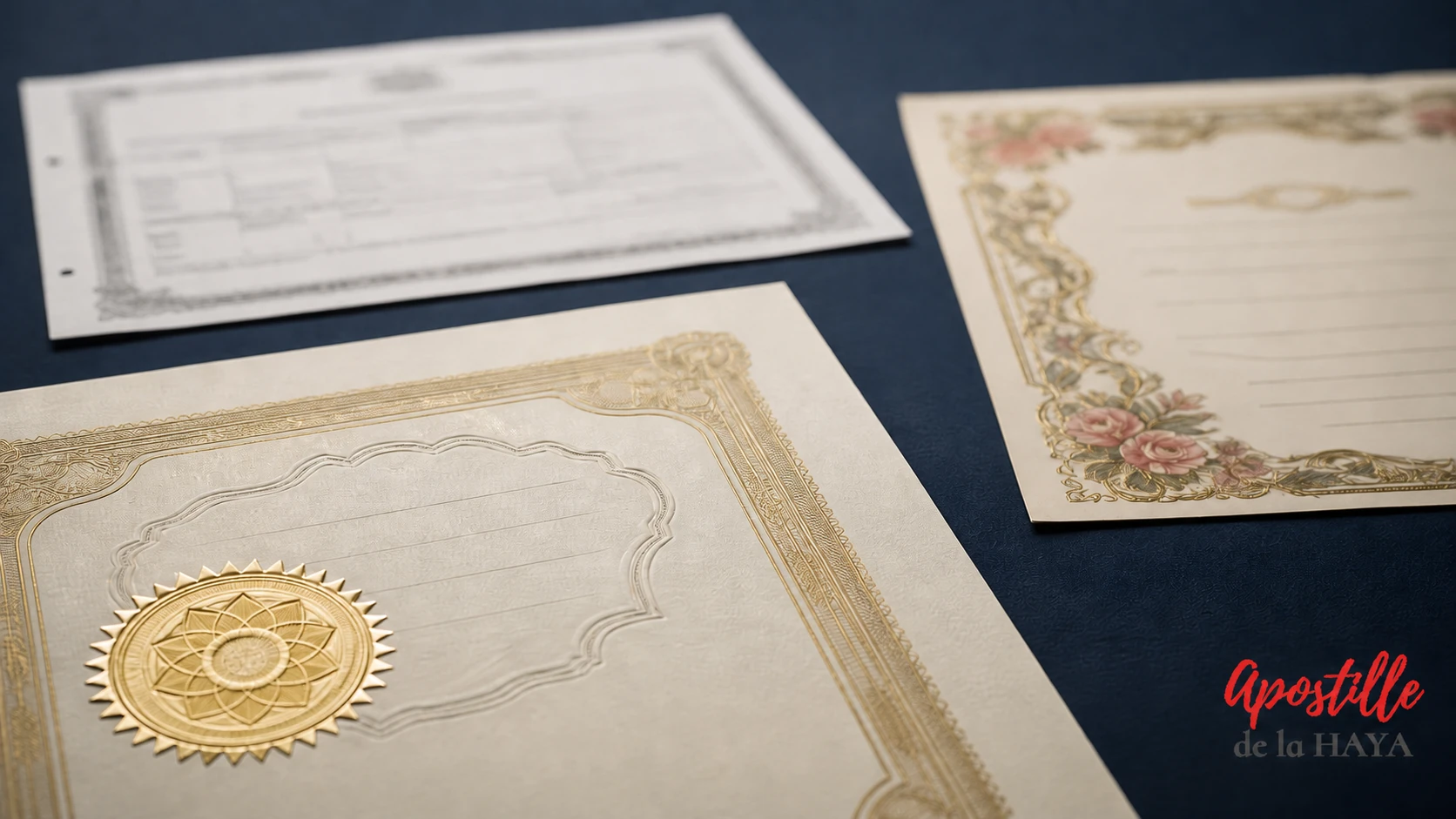
A notarized document may need an apostille or authentication before it can be used
in another country. That later certificate authenticates the public official’s
signature or authority. It does not validate the document’s private content.
The route depends on the document, issuing jurisdiction, destination country and
receiving authority. A state notarized document follows a different path from a
federal record or a state-issued certified copy. Translation requirements also vary.
Before ordering an apostille, confirm whether the destination participates in the
Hague Apostille Convention and whether the recipient wants the original, a certified
copy or a notarized private document. Notary Public Center can review the available
process and coordinate related services when applicable.
How Notary Public Center Can Assist
Notary Public Center reviews the document type, requested notarial act, signer
location, identification and recipient instructions. We then explain whether an
in-person or online Florida notarization is available. The final choice must remain
consistent with the document issuer’s or receiving party’s requirements.
Our service may include appointment coordination, identity-verification
preparation, execution of an eligible notarial act and review of a possible apostille
or authentication path. We do not promise that an independent authority will accept
a document. We help reduce avoidable procedural problems before submission.
Explore our notary services or
contact Notary Public Center before
signing. You may also request assistance through
WhatsApp.
Choose the Notarial Process That Matches the Document
A notary public verifies identity, personal appearance and the performance of a specific notarial act. The notary then completes the certificate and seal required for that act. This process helps deter fraud. However, it does not replace legal advice or guarantee acceptance.
Start with the receiving party’s instructions. Then confirm the certificate, identification, witnesses and format. If the document may qualify for Florida Remote Online Notarization, confirm that the recipient accepts an electronic record. If the document will be used abroad, review the later authentication path before signing.
Legal notice: This article provides general information. It does not provide legal advice or create an attorney-client relationship. Notarial, witness, authentication and acceptance requirements depend on the document, jurisdiction and receiving authority.
Frequently Asked Questions
What does a notary do?
A notary verifies the signer under the applicable state rules, confirms personal appearance, performs the requested notarial act and completes the certificate. The notary does not validate every statement in the document or guarantee acceptance.
Is a notary public the same as a lawyer?
No. A notary who is not separately licensed as an attorney cannot give individual legal advice, represent a client or select a notarial act when that choice requires legal judgment.
Can a Florida notary notarize a document online?
An online notary registered under Florida law may perform eligible acts through approved audio-video procedures. The online notary must be in Florida. Recipient acceptance and document eligibility must be confirmed.
Should I sign before meeting the notary?
It depends on the requested act. A jurat generally requires signing in the notary’s presence. An acknowledgment may allow an earlier signature, but the signer must still appear and acknowledge it.
Does a notarized document need an apostille?
Only in some international uses. The answer depends on the document, issuing jurisdiction, destination country and receiving authority. An apostille authenticates the relevant public signature or seal, not the truth of the document’s contents.
The information contained in this publication is provided for general informational purposes only and does not constitute legal advice. Reading or using this content does not create and is not intended to create an attorney-client relationship. No reader or user should act or refrain from acting based on the information presented herein without first consulting an attorney duly licensed to practice law in their jurisdiction.