What is an A-Number? An Alien Registration Number, often written A-Number, is a government identifier associated with a person’s immigration records. It generally contains seven, eight or nine digits and may appear on documents using the label USCIS Number or USCIS#.
Agencies use this identifier to connect records with the person. It does not, by itself, establish immigration status, permission to work or whether a removal order exists. Those questions require the relevant documents and legal history.
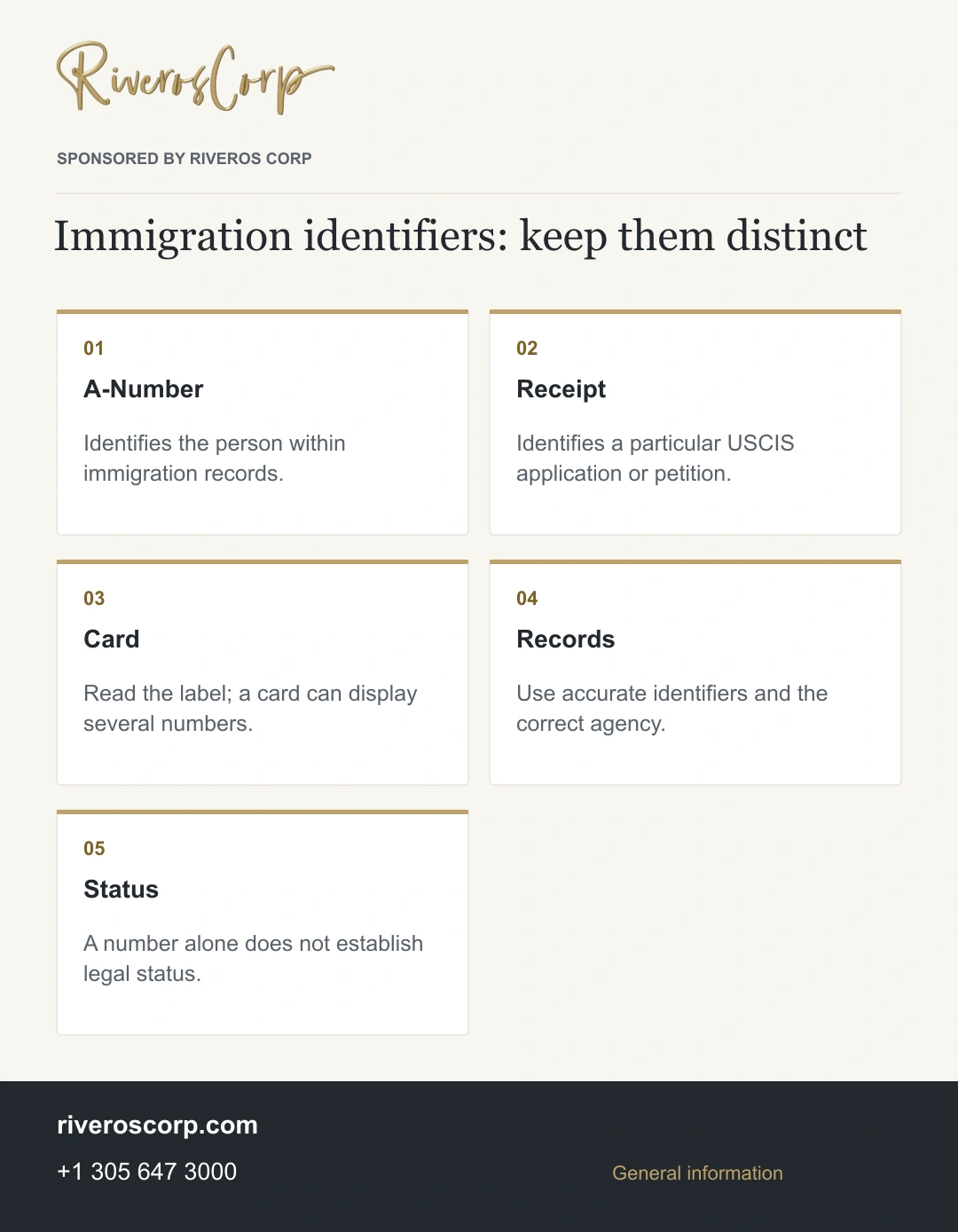
Confusion often arises because an immigration notice or card contains several identifiers. An A-Number, a receipt number and a card number serve different purposes. Before using an identifier in a records request or case inquiry, check the label and its source document rather than assuming every long code refers to the same thing.
For a records request, the number works alongside the person’s name, dates and other identifying details. Identity verification and any required authorization still matter, even when the requester knows the correct number.
What is an A-Number used to identify?
An A-Number is a personal identifier in the immigration records system. Agencies use it to connect information with a person and the associated immigration file. It can help distinguish people with similar names and link records created at different stages of an immigration history.
The identifier is not a complete record. Knowing it does not reveal every application, encounter, decision or status change. A file may contain documents from more than one agency, and some relevant records may require a separate request to the agency that maintains them.
Treat the identifier as a way to locate and organize evidence. It should not replace reading the actual notices or decisions. A person asking whether an application was approved, whether employment authorization remains valid or whether a court entered an order needs the documents addressing that particular question.
Who receives an A-Number?
An A-Number can arise in a benefits application or another immigration process. USCIS is not the only agency that can issue one: its employment authorization instructions also identify ICE, CBP, EOIR and the Department of State. The reason a person has the number depends on that person’s record history.
Not every traveler receives the same documents or identifiers. A visitor’s admission record can use an I-94 number, while a Permanent Resident Card carries an A-Number. Some people first encounter their A-Number in an application notice or enforcement document. The number alone does not reveal which process produced it.
If a form asks for the number and you do not know whether one exists, review earlier notices and cards. A document that has no A-Number does not prove that the person has never been assigned one. Preserve the available documents rather than substituting a passport number, Social Security number or a relative’s identifier.
Where to find the identifier
An A-Number may appear on a Permanent Resident Card, an Employment Authorization Document or certain immigration notices and court records. On some cards, the USCIS Number identifies the A-Number. Other numbers on the same card serve different purposes.
Look at the printed label rather than choosing an identifier by its location alone. Card designs and document layouts can change. A guide based only on a picture of an older card may cause someone to copy a card number or another identifier instead.
Keep a readable copy of the complete document for the person reviewing it, including the relevant side of a card. A cropped image containing only digits can remove the label needed to identify the field correctly. Protect the document when sharing it and avoid posting a full card publicly to ask which identifier to use.
A USCIS receipt number identifies a particular filing
USCIS describes its receipt number as a unique 13-character identifier for an application or petition it receives. That reference helps track the particular filing. It is different from the A-Number associated with the person’s immigration records.
One person can have several receipt numbers because they have filed different applications or petitions. A receipt for one application does not automatically provide the status of another. When checking a filing, match the receipt number to the correct notice and form.
An A-Number and receipt number can appear on the same notice without becoming interchangeable. Read the field requested by the system or form before entering either one. If a record request concerns several filings, preserve the corresponding notices so the reviewer can understand which receipt belongs to each part of the history.
A Social Security number serves a different system
A Social Security number is not an A-Number. The numbers serve different government functions, and sharing the same number of digits does not make them substitutes. An individual may have both, one or a different set of documents depending on the circumstances.
The distinction also applies to an ITIN, a passport number, an I-94 admission number and a USCIS online account number. Each identifier has its own purpose. A request for one should not be answered with another simply because it is easier to locate.
When assembling records, label the identifiers by type and retain the document supporting each one. This reduces transcription mistakes and helps a professional spot inconsistencies. Keep the list secure; collecting identifiers in one place makes organization easier but also creates a sensitive record that should not circulate unnecessarily.
Having an A-Number does not prove a particular status
This identifier can appear in different immigration contexts. Its existence does not establish permanent residence, a pending application’s outcome or current employment authorization. A person should not describe the identifier itself as a work permit or immigration approval.
Similarly, an A-Number does not prove that a removal order exists. Someone may have the identifier through a benefits process or another immigration history. Conversely, an unsuccessful search using an identifier does not establish that every agency has no relevant record.
An attorney or appropriately authorized representative should evaluate legal status from the actual record. A document service can help organize notices and request records, but it cannot turn the identifier into a legal determination. That distinction is particularly important before travel, employment decisions or responses to government correspondence.
If two documents show different A-Numbers
An A-Number is intended to identify the person consistently, but records can contain errors or more than one assigned number. Do not assume a discrepancy is harmless, and do not choose whichever identifier produces the preferred search result.
Preserve both documents and note their dates, issuing agencies and the names shown. USCIS’s employment authorization instructions expressly account for applicants with more than one A-Number. That possibility is a reason to preserve all known identifiers. Keep the source documents unchanged so the person reviewing the history can see which agency used each number and when.
Where an agency asks about earlier identifiers, provide accurate information through the applicable process. A complete history helps the agency identify the relevant records. Avoid making a legal conclusion about the effect of duplicate identifiers without reviewing the underlying decisions and case history.
The number helps locate an A-File or other records
A known A-Number can help identify records, but a request still needs enough information about the person and the documents sought. The agency separately checks identity and any consent required to release personal records. Knowing an identifier does not give another person permission to obtain a private file.
Our guide to USCIS FOIA requests explains how a records request differs from a benefits application. USCIS is the custodian of A-Files, which can include applications, correspondence and documents added by other immigration agencies. A request may seek a particular document or a broader file, depending on what is missing.
An A-File is not necessarily every record held anywhere in government. ICE and CBP can hold additional records outside it, and EOIR maintains the court’s Record of Proceedings. Describe the event or document you need as well as the identifier. That helps distinguish a missing application from a missing court decision or detention record.
What if you cannot find the A-Number?
Other identifying information may allow a records search when the A-Number is unknown. EOIR’s guidance gives a specific alternative for a removal proceeding: the person’s full name, charging document date, country of origin and location of the immigration hearing. Identity verification and any required consent remain part of that request.
Gather names previously used, dates, locations and copies of notices connected with the process. Identify approximate dates as approximate. A prior representative may have copies of notices that help connect a person’s name with an identifier, but any number found should be checked against its source document.
Our overview of the FOIA process explains why the description matters. If the agency asks for more information, keep that request with the response you provide. A search depends on the identifying facts and records within its scope; a missing number should be disclosed, not replaced with a guess.
Get help preparing a records request
Riveros Corp’s USCIS FOIA service includes gathering identifiers, preparing a description of the records and organizing identity verification and authorization. For an online request, it assists the requester with filing through the requester’s USCIS account and follows up on the agency’s response. An administrative FOIA appeal can be a separate part of the engagement if requested.
The service helps the requester obtain records. Riveros does not file immigration benefits, represent the person before USCIS or interpret the file to decide immigration eligibility. An immigration attorney or appropriately authorized representative handles questions about status, an order or the available legal response.
Keep the request’s tracking number with the submitted documents. That number tracks the records request; it is distinct from the A-Number and from an earlier benefit application receipt. If a hearing or deadline is approaching, tell the legal representative promptly. A pending FOIA request does not suspend the proceeding or extend its deadlines.
Frequently asked questions
Is my USCIS Number the same as my A-Number?
On documents such as a Permanent Resident Card or Employment Authorization Document, the USCIS Number can identify the A-Number. Check the actual label and document. A USCIS online account number or a receipt number is different, so the word USCIS alone does not make every identifier interchangeable.
Is an A-Number the same as a receipt number?
No. The A-Number identifies the person within immigration records, while a USCIS receipt number identifies a particular application or petition. One person may have multiple receipt numbers. Use the identifier requested for the particular inquiry and retain the notice showing which filing the receipt concerns.
Does having an A-Number mean I have a green card?
No. The identifier itself does not establish permanent residence or any other particular immigration status. Review the actual status document and relevant decisions. An A-Number can appear in different immigration contexts, so its presence should not be treated as proof of an approval or work authorization.
Can I request records if I cannot find my A-Number?
It may be possible using other identifying information, depending on the agency and request. Review the current requirements and provide accurate names, dates and relevant records. Do not invent an identifier. The agency may need additional details before it can conduct an adequate search or release personal records.
Is my alien number the same as my Social Security number?
No. An A-Number identifies the person in immigration records. A Social Security number belongs to the Social Security system and serves a different purpose. Even when both have nine digits, use the identifier actually requested and keep the document that confirms which type of number it is.
Prepare a USCIS records request with Riveros Corp
Contact Riveros Corp at +1 305 647 3000 or through WhatsApp about the immigration records you need. The team can help organize identifying documents, prepare the request and follow its progress. Use a private channel for personal identifiers and keep any legal deadline separate from the records work.
By Zulma E Bourelly. General information only. Riveros Corp provides records request assistance, not immigration legal advice or representation.